How to Use a Credit Card Without Paying Interest
Learn how to use a credit card without paying interest by understanding grace periods, statement balances, due dates, minimum payments, and common mistakes.
Key takeaway
Learn how to use a credit card without paying interest by understanding grace periods, statement balances, due dates, minimum payments, and common mistakes.
Some links are affiliate links. If you sign up we may earn a commission at no extra cost to you. See our disclosure. This is educational content, not financial advice.
A credit card can be useful without turning into expensive debt. The trick is knowing when interest is charged and paying your balance the right way. You don't have to stop using the card; you have to treat it as a way to pay, not as extra income.
Here's how.
The basic rule
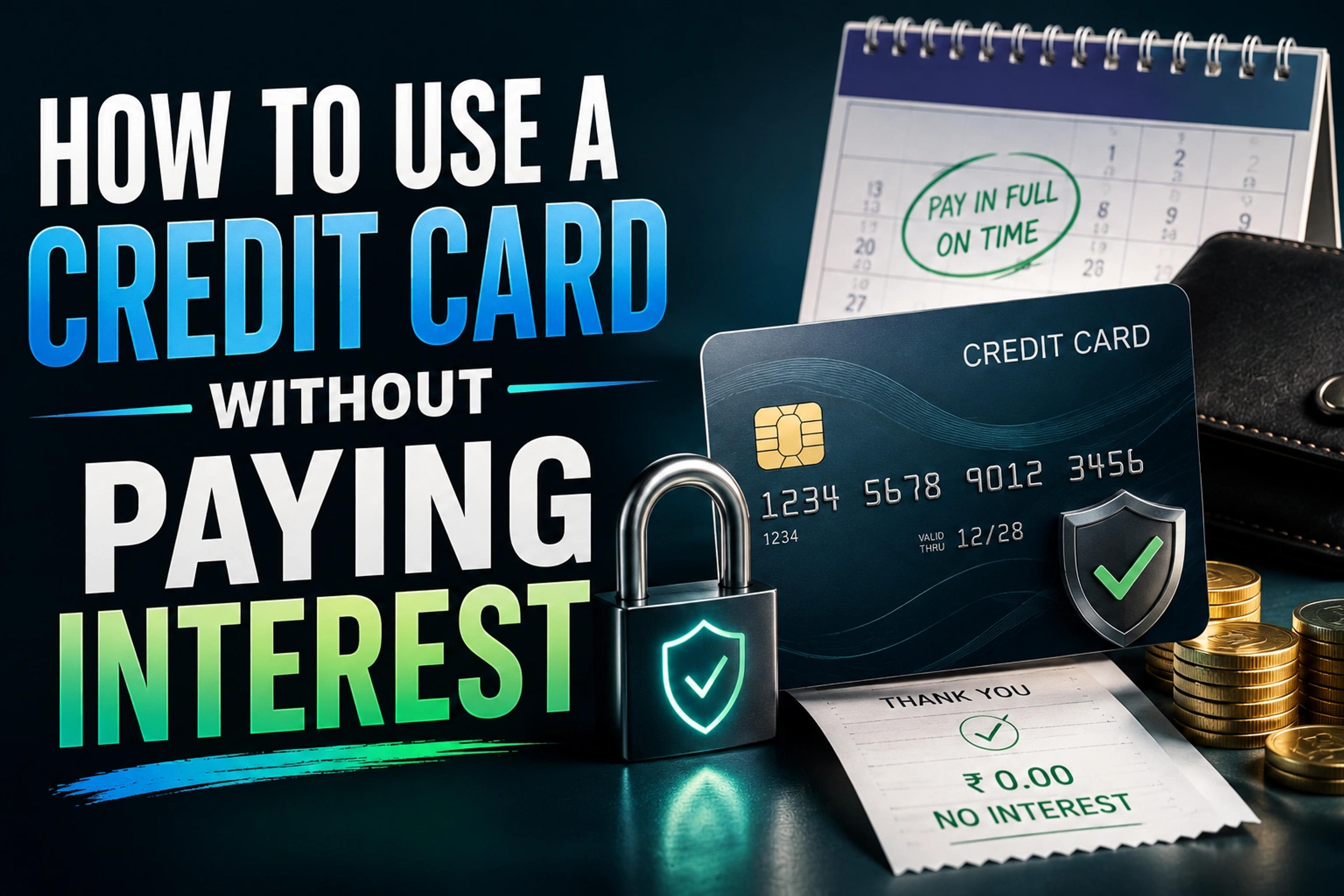
On most cards that offer a grace period on purchases, you can generally avoid interest by paying the full statement balance by the due date.
Say you spend ₹20,000 during a billing cycle. Your statement shows a statement balance of ₹20,000, a minimum payment of ₹1,000 and a due date of August 25. If your card gives a grace period on purchases, paying the full ₹20,000 by August 25 lets you avoid purchase interest.
Paying only ₹1,000 may stop the account being marked late, but it generally won't stop interest on the unpaid balance. The minimum payment is not an interest-free payment.
Understand your billing cycle
This is where many people get confused. Your card doesn't simply run from the 1st to the last day of each month; it has a billing cycle. For example, the billing period might run from July 1 to July 31, with the statement generated on July 31 and payment due on August 25.
Purchases made in July appear on that statement. If your card has a grace period and you meet its conditions, paying that statement balance in full by the due date means no interest on those purchases. Your actual dates depend on your card, so check your statement rather than assuming.
Statement balance vs current balance
The statement balance is the amount on your latest completed statement. The current balance is what you owe right now, which may include purchases made since that statement.
Suppose your statement says ₹15,000 and you then spend another ₹5,000. Your current balance is now ₹20,000. If you're trying to avoid purchase interest and your card has a normal grace period, the amount that matters is generally the statement balance due by the payment date, as long as you meet the card's grace-period conditions. Your issuer's terms always take priority.
Don't mix up the due date and the statement date
The statement date is when your billing cycle ends and the statement is produced. The due date is the deadline for the required payment. With a statement on July 31 and payment due August 25, you don't have to pay on July 31, but you do have to pay by August 25. Paying early is perfectly fine and can make the card easier to manage.
Set up automatic payments
Automation is one of the easiest ways to avoid accidental interest and late fees. If your bank or card issuer allows it, set up an automatic payment for the full statement balance, and add a reminder to check your account before the payment goes out.
The automatic payment means you won't forget, and the monthly check helps you catch mistakes or unexpected charges. Make sure the linked account always has enough money in it.
Don't spend more because of your credit limit
This is one of the most important rules. A ₹1,00,000 limit doesn't mean you have ₹1,00,000 to spend; it's borrowed money. Only put on the card what you could comfortably pay from the cash you have.
If you have ₹50,000 for your monthly expenses, charging ₹40,000 can be reasonable, as long as that spending is already in your budget and you can pay the statement in full. Your credit limit should never become your spending target.
Avoid cash advances
Cash advances can work differently from normal purchases. Interest may start from the day you take the cash rather than after a grace period, and extra fees may apply. So if you want to use a card without paying interest, don't assume every transaction is treated the same. Check the terms for:
- Cash advances
- Balance transfers
- Fees
- Promotional balances
- Other special transactions
Be careful with "0% interest" offers
"0% interest" doesn't always mean the same thing. Some promotions come with conditions, and a normal grace period is different from a deferred-interest promotion. With some deferred-interest deals, if you don't pay off the promotional balance by the deadline, you can be charged the interest that built up during the promotion.
Before accepting an offer, find out:
- How long the promotion lasts
- What purchases qualify
- Whether there's a fee
- What happens when the promotion ends
- Whether missing a required payment changes the terms
Never go on the headline alone.
What happens if you carry a balance?
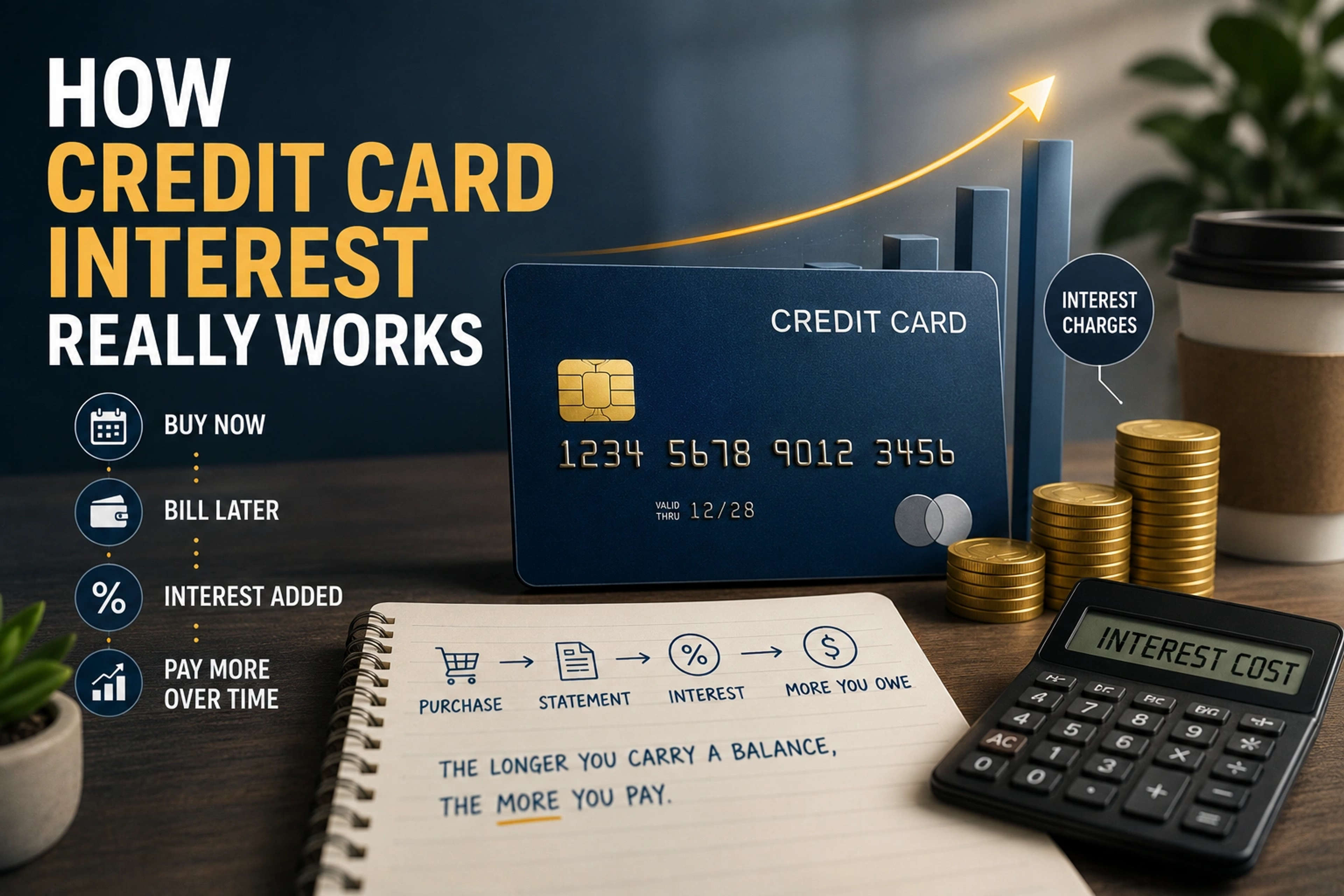
Say your statement balance is ₹30,000 and you pay ₹10,000. You still owe ₹20,000, and unless your card offers some other interest-free arrangement, interest can be charged on that unpaid amount. Many issuers calculate interest daily, often using an average daily balance.
There can be a second problem. If you lose your purchase grace period, new purchases may start accruing interest too, depending on your card's terms. That's why carrying a balance can make a credit card far more expensive than you expected.
A simple system
- Budget the purchase first, so you know you can afford it before it goes on the card.
- Use the card for planned spending, not as extra income.
- Check your statement: the transactions and the amount due.
- Pay the full statement balance by the due date, where your card's terms let you avoid interest that way.
- Keep an eye on your account. Make sure the payment went through and look for unauthorised or wrong charges. The FTC recommends reviewing statements and keeping records to help spot billing errors.
Example: using a card interest-free
Say your budget allows ₹25,000 a month for regular expenses, and you put these on your card:
- Groceries: ₹8,000
- Fuel: ₹4,000
- Utilities: ₹5,000
- Other planned expenses: ₹3,000
That's ₹20,000 in total, and you already have the money in your bank account. When the statement shows a balance of ₹20,000, you pay ₹20,000 by the due date. If your card has a purchase grace period and you meet its conditions, you generally pay no interest on those purchases. The card has changed how you pay, not how much you spend, and that's the goal.
Common mistakes that lead to interest
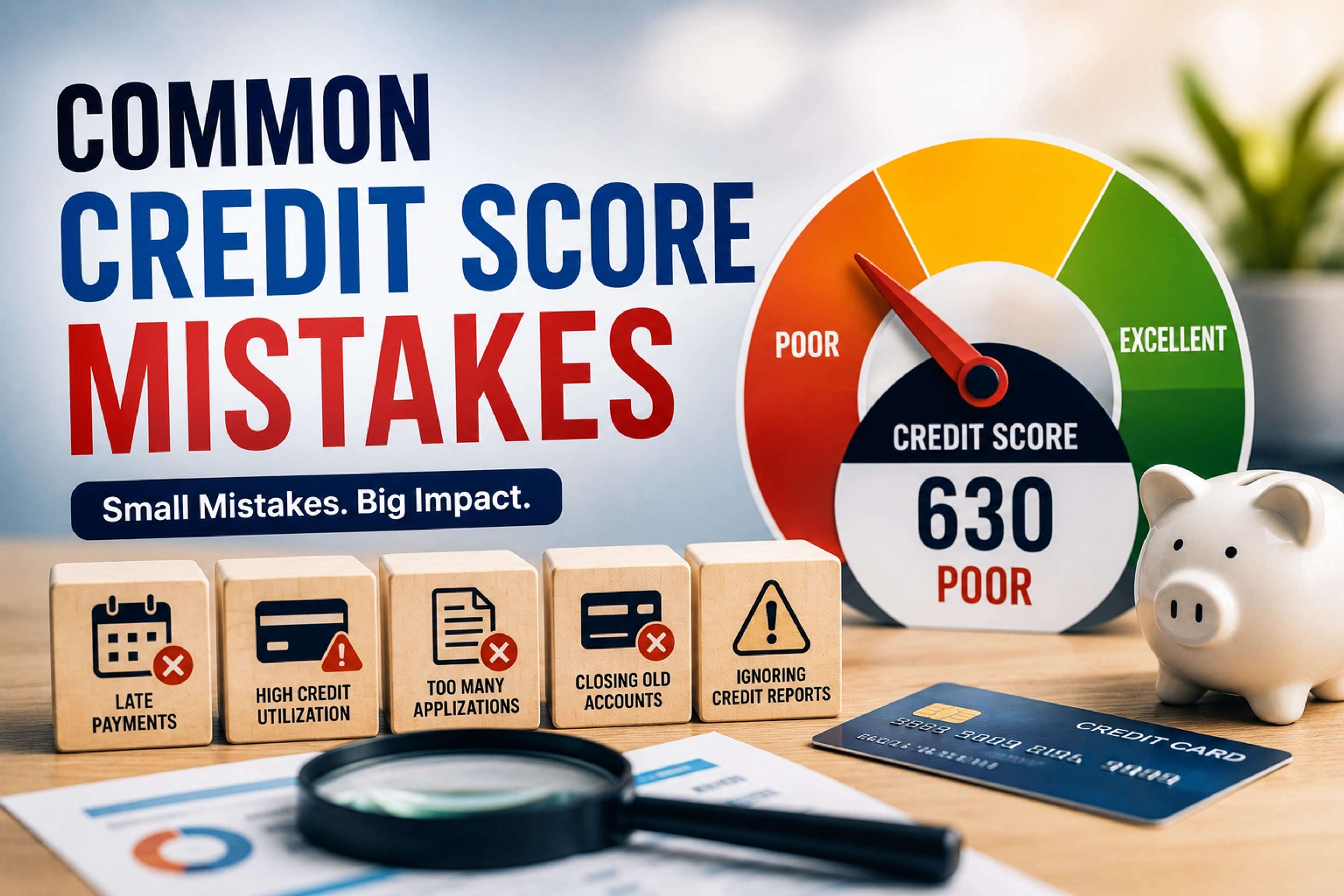
- Paying only the minimum. It keeps the account current, but it doesn't make the balance interest-free.
- Missing the due date. Late payments can bring fees and other consequences.
- Assuming every transaction has a grace period. Cash advances and some promotional balances follow different rules.
- Spending before checking your budget. A card can make something you can't afford feel affordable.
- Ignoring the statement. You could miss a wrong or unauthorised charge.
- Assuming "0% interest" comes with no conditions. Promotions can have specific requirements.
What if you can't pay the full balance?
Don't ignore it. Make at least the minimum payment by the due date so you aren't late, then make a plan to bring the balance down, and stop adding unnecessary purchases while you pay it off.
If you can't pay the full balance month after month, your priority should switch from earning rewards to getting the debt under control. Rewards are rarely worth paying high interest for.
Final thoughts
A credit card doesn't have to cost you interest. Used carefully, it's just a convenient way to pay for things you can already afford. Spend within your budget, understand your billing cycle, know your due date, pay the full statement balance when your card's grace-period terms let you avoid interest that way, and be careful with cash advances and promotional offers.
Most of all, never confuse your credit limit with money you can afford to spend. That's what separates using a card well from letting it become expensive debt.