How Credit Scores Work
Learn how credit scores work, what affects them, why your score changes, how credit utilization and payment history matter, and practical ways to build better credit.

Key takeaway
Learn how credit scores work, what affects them, why your score changes, how credit utilization and payment history matter, and practical ways to build better credit.
Some links are affiliate links. If you sign up we may earn a commission at no extra cost to you. See our disclosure. This is educational content, not financial advice.
Your credit score can affect whether you're approved for a credit card, personal loan, car loan or mortgage, and the interest rate and terms you're offered. There's also a lot of confusion around it. Does carrying a card balance help your score? Does checking your own score hurt it? Should you close an old card? How much does one late payment matter? Is 700 actually good?
The answers aren't always what people expect. This guide explains how credit scores work, what affects them, why they change and what you can realistically do to build stronger credit.
What is a credit score?
A credit score is a number calculated from the information in your credit report. Put simply, it helps lenders estimate how likely you are to repay borrowed money as agreed. Many common credit scores range from 300 to 850, although different scoring models can use different ranges. Your credit report feeds a scoring model, the model produces a score, and lenders use that score as part of judging how risky it is to lend to you.
The score isn't a complete picture of your finances. A lender may also look at your income, existing debts, employment, the type of credit you're asking for and its own approval rules.
Credit report vs credit score
People often use the two terms interchangeably, but they're different things. Your credit report holds information about your credit accounts and payment history, which can include:
- Credit cards
- Loans
- Account balances
- Payment history
- Credit limits
- When accounts were opened
- Some collection information
- Credit inquiries
Your credit score is a number produced from that report by a particular scoring model. The report is the raw information and the score is one way of evaluating it. That matters because fixing an error on your report can change the scores calculated from it.
You don't have just one credit score
This surprises a lot of people. You can have several credit scores at once, because:
- Different scoring models exist.
- Different lenders use different versions.
- Different credit reports may contain different information.
- Scores are calculated at different times.
The score in your credit card app may not be exactly the one a mortgage lender uses. That doesn't make either one wrong; they may just come from a different model, bureau or date.
What is a FICO score?
FICO is one of the main credit scoring systems lenders use in the United States. FICO scores generally range from 300 to 850, and the commonly used bands are:
| FICO Score | General Rating |
|---|---|
| 800–850 | Exceptional |
| 740–799 | Very Good |
| 670–739 | Good |
| 580–669 | Fair |
| 300–579 | Poor |
These bands are useful guides, but no single score guarantees approval. Each lender sets its own criteria and may look at more than the score.
You don't need an 850 to have excellent credit. A score in the good or very good range already puts you in a much stronger position than fair or poor credit. Focus on healthy credit habits rather than a perfect number.
The five main factors behind a FICO score
FICO groups the information it uses into five categories:
| Factor | Approximate Weight |
|---|---|
| Payment history | 35% |
| Amounts owed | 30% |
| Length of credit history | 15% |
| New credit | 10% |
| Credit mix | 10% |
The percentages help you understand the model, but they aren't a formula you can use to work out your exact score. How much each factor matters can vary with your overall credit profile.
1. Payment history (about 35%)
This is your track record of paying credit accounts as agreed, and FICO treats it as its largest category. Lenders want to know whether you pay back what you borrow on time. Your payment history can include:
- On-time payments
- Late payments
- Missed payments
- Accounts that became seriously overdue
- Some collection information
- Bankruptcies and other serious negative events
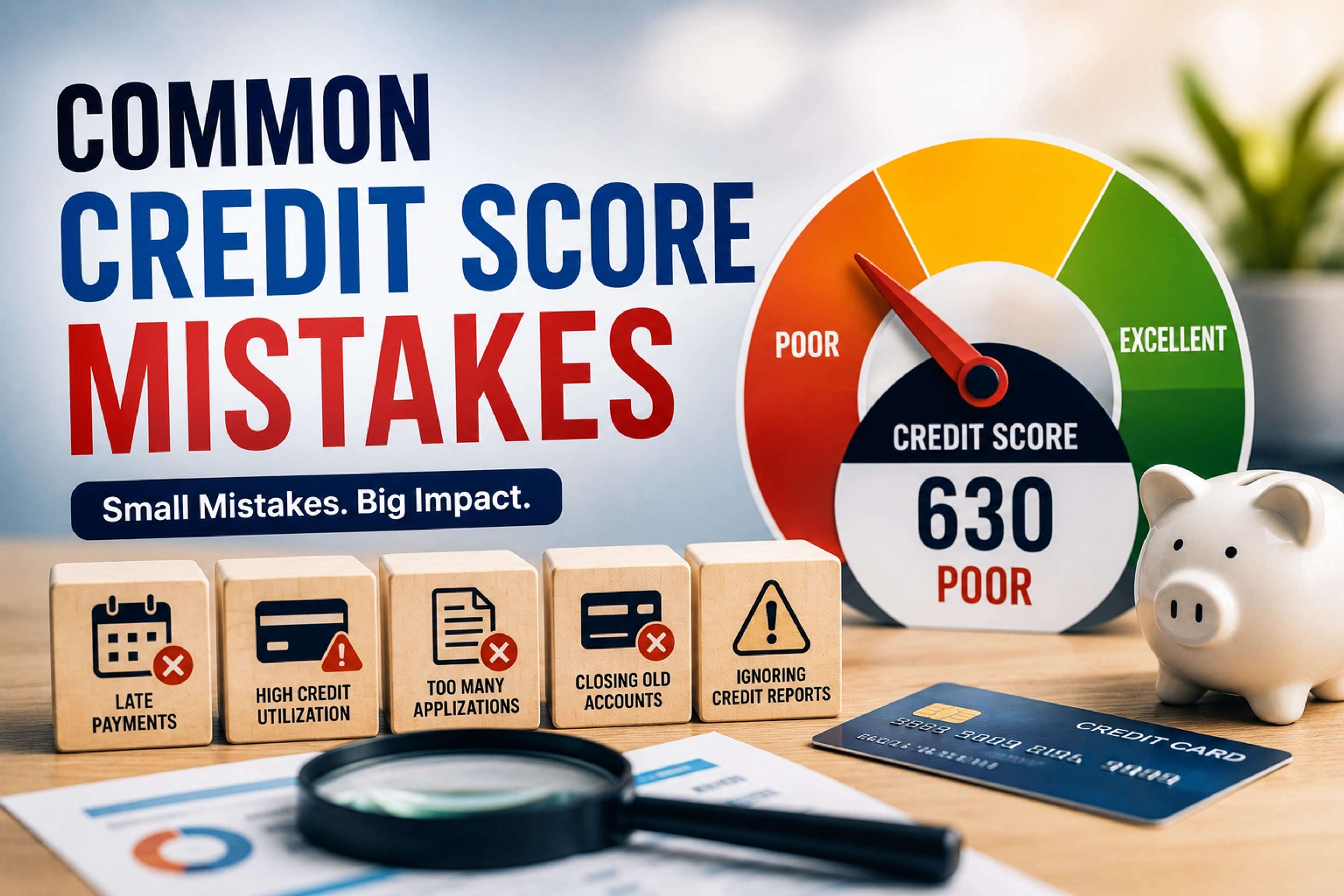
If you remember one thing from this article, make it this: pay your credit bills on time. A perfect utilisation ratio won't make up for repeatedly missed payments. Set up automatic payments or reminders so a forgotten due date doesn't damage an otherwise good record; the CFPB specifically recommends both as ways to avoid missed payments.
2. Amounts owed and credit utilisation (about 30%)
This category is about more than how much debt you have. FICO looks at several aspects of what you owe, including your balances and how much of your available revolving credit you're using. That last part is called credit utilisation.
Say you have a $10,000 credit limit and a $2,000 card balance. Your utilisation is $2,000 ÷ $10,000, or 20%. If the balance rises to $8,000, your utilisation becomes 80%, and even if you pay every bill on time, that high utilisation can pull your score down.
You may have heard that you should never use more than 30% of your limit. It's a useful rule of thumb, not a magic threshold; scoring models don't suddenly mark you down at exactly 30%. In general, lower utilisation is better for your score, all else being equal. The CFPB notes that experts advise keeping utilisation at or below 30%, but that isn't a guaranteed scoring formula.
You also don't need to carry a balance to build credit. That's one of the biggest credit myths. You can use a card and pay the balance in full, which avoids interest while still showing responsible behaviour.
Your score can even dip when you pay in full. Card issuers can report your balance at different points in the billing cycle, and FICO notes that the balance on your report is often the one from your latest statement. So you might spend $2,000, get a statement showing $2,000, have that $2,000 reported, pay the statement in full, and still see higher utilisation for a while. You haven't done anything wrong; your utilisation changes as the reported balance changes.
3. Length of credit history (about 15%)
Scoring models also look at how old your accounts are. FICO considers things like:
- The age of your oldest account
- The age of your newest account
- The average age of your accounts
- How long individual accounts have been open
- How recently some accounts were used
A longer, well-managed history generally helps. That's a reason not to close an old card you don't use without thinking it through: closing it can reduce your available revolving credit and push up your utilisation if you carry balances elsewhere. The effect isn't the same for everyone, so look at your whole credit profile rather than following a blanket rule.
4. New credit (about 10%)
Applying for several new accounts in a short time can look like you're seeking a lot of credit. When you apply, the lender may make a hard inquiry. Hard inquiries can affect your score, though the effect is usually fairly small and temporary. FICO says inquiries stay on your report for two years, but its models only count them for a shorter period, such as the most recent 12 months.
Don't confuse hard and soft inquiries. A hard inquiry usually comes from applying for credit and may affect your score. A soft inquiry happens when you check your own credit or when some companies look at your credit for other reasons, and it doesn't affect your scores. Don't apply for cards just to see whether you'd be approved; apply when you actually need the credit.
5. Credit mix (about 10%)
Credit mix means the different types of credit in your profile, such as:
- Credit cards
- Retail accounts
- Instalment loans
- Mortgages
Experience managing different types of credit can help your score, but you don't need to take out loans just to improve your mix; FICO itself says it isn't necessary to have one of each. It's a small part of the score, so don't borrow money you don't need to make your profile look more varied.
What actually makes a credit score go up?
There's no single button that raises your score. Improvement usually comes from a pattern of responsible behaviour:
- Pay on time. Payment history is FICO's largest category.
- Keep revolving balances under control. Lower utilisation is generally better.
- Avoid unnecessary credit applications. Only apply for credit you need.
- Keep established accounts in good standing. A longer, well-managed history helps.
- Check your credit reports for errors. Wrong information can hurt your profile.
How to build credit from scratch
If you've never had credit, don't panic; everyone starts somewhere. A common approach is to begin with a product designed for people with little or no credit history, such as a secured credit card, depending on what you qualify for. The aim isn't to borrow a lot. It's to build a record of handling credit responsibly:
- Open a suitable credit account.
- Use only a manageable amount.
- Pay every bill on time.
- Keep balances low.
- Don't apply for several accounts at once.
- Give your history time to build.
FICO notes that a valid FICO score generally needs at least one account that has been open for six months or more, and at least one account reported to a bureau in the past six months.
How to rebuild a low credit score
If your credit isn't where you want it, don't try to fix everything at once. Start with the basics.
First, check your reports. Look for accounts you don't recognise, wrong late payments, wrong balances, duplicate accounts and accounts wrongly shown as open or closed. The CFPB recommends checking your reports regularly because errors can hurt your credit.
Second, get current on overdue accounts, and keep making on-time payments to build a stronger record from here on.
Third, pay down high card balances. If your cards are near their limits, reducing the balances can improve your utilisation.
Fourth, stop creating new problems. Avoid taking on unnecessary debt while you rebuild.
Finally, be patient. Credit improves over time rather than overnight. Older negative information tends to matter less as newer positive history builds up, although the exact effect depends on the scoring model and your full profile.
How to check your credit without hurting your score
Checking your own credit report does not hurt your score; the CFPB says so specifically. You can also get credit scores through many banks and other services, but the score you see may not match the one a particular lender uses. For US credit reports, the CFPB points people to AnnualCreditReport.com for reports from the major credit reporting companies.
Common credit score myths
Myth 1: Carrying a balance improves your score.
False. You don't need to pay card interest to build credit. Responsible use and on-time payments are what matter, and paying your statement balance in full avoids unnecessary interest.
Myth 2: Checking your own score hurts your credit.
False. Checking your own credit is a soft inquiry and doesn't lower your score.
Myth 3: You only have one credit score.
False. You can have several, because different scoring models, credit reports, lenders and loan products are involved.
Myth 4: You need an 850 to get good rates.
False. 850 is the top of the common FICO range, but lenders set their own criteria, and a score in the good or very good range can already show strong creditworthiness.
Myth 5: Closing a credit card always improves your credit.
False. Depending on your situation, closing an account can affect your available credit and utilisation. Don't close accounts just because you've heard it's always better.
Myth 6: A high income automatically means a high credit score.
False. Credit scores are based mainly on what's in your credit report. Income isn't part of the FICO score itself, although lenders may look at it separately when they assess an application.
What doesn't directly build your score?
Some things are good for your finances but aren't direct ingredients in a typical FICO score, for example:
- A high salary.
- A large savings account.
- Paying rent in cash when the payments aren't reported.
- A large investment portfolio.
They still matter financially; they just aren't the information a conventional credit score is calculated from.
A simple monthly credit routine
You don't need to watch your credit every day. Before each due date, check your upcoming card and loan payments; on the due date, make sure the required payments go out; and when your statement arrives, review the balance and charges. Every few months, go through your credit reports for anything unfamiliar or wrong, and before applying for major credit, check your profile and fix any errors early. It takes far less time than dealing with a preventable problem later.
Before you apply for a mortgage or car loan
Don't wait until application day to think about your credit. Several months beforehand:
- Check your credit reports.
- Dispute anything inaccurate.
- Avoid unnecessary new credit applications.
- Keep revolving balances under control.
- Keep paying every bill on time.
- Compare lenders instead of assuming the first offer is best.
Lenders can use different scoring models and criteria, so one lender's decision doesn't necessarily predict another's.
Your credit score action plan
This week:
- Check your credit reports.
- List all your active credit accounts.
- Turn on payment reminders or autopay.
- Look for unfamiliar accounts or errors.
This month:
- Pay every account on time.
- Review your credit card utilisation.
- Stop unnecessary credit applications.
- Make a plan for any high-interest debt.
Over the next 6–12 months:
- Keep making on-time payments.
- Keep revolving balances manageable.
- Avoid unnecessary new accounts.
- Check your credit reports now and then.
- Let your positive history build.
The boring approach is usually the one that works. Consistency beats credit score hacks.
Final thoughts
A credit score doesn't measure how wealthy or intelligent you are, and it isn't something you need to keep manipulating. It's a risk signal built from your credit history. The most effective way to build strong credit is simple: borrow responsibly, pay on time, keep revolving balances under control, apply for credit thoughtfully, check your reports for errors and give your history time to grow.
You don't need complicated tricks, you don't need to carry a balance, and you don't need an 850 to have healthy credit. Understand what the number represents, focus on the parts you can control and let consistent habits do the work.
Frequently asked questions
How long does it take to improve a credit score?
There's no universal timeline. The effect depends on what is currently hurting your credit, the information in your reports, and the scoring model being used. Consistent positive behavior can help over time, but rebuilding from serious negative information generally requires patience.
Is 700 a good credit score?
For FICO scoring, 700 falls within the Good range of 670–739. However, approval decisions and offered rates depend on the lender and other aspects of your application.
Does paying off a credit card increase your score?
It can, particularly if paying it down reduces your reported utilization. But the exact score change depends on your entire credit profile and the scoring model.
Should I keep an unused credit card open?
Not automatically and not automatically closed either. Consider its annual fee, benefits, security, and how closing it could affect your available credit and overall profile.
How often should I check my credit?
Regular monitoring can help you catch errors or suspicious activity early. Checking your own credit does not hurt your score.
Can I get a perfect 850 score?
Yes, 850 is within the commonly used FICO range, but there's little practical reason to obsess over reaching the absolute maximum. Strong, consistent credit habits are more important than chasing a particular number.