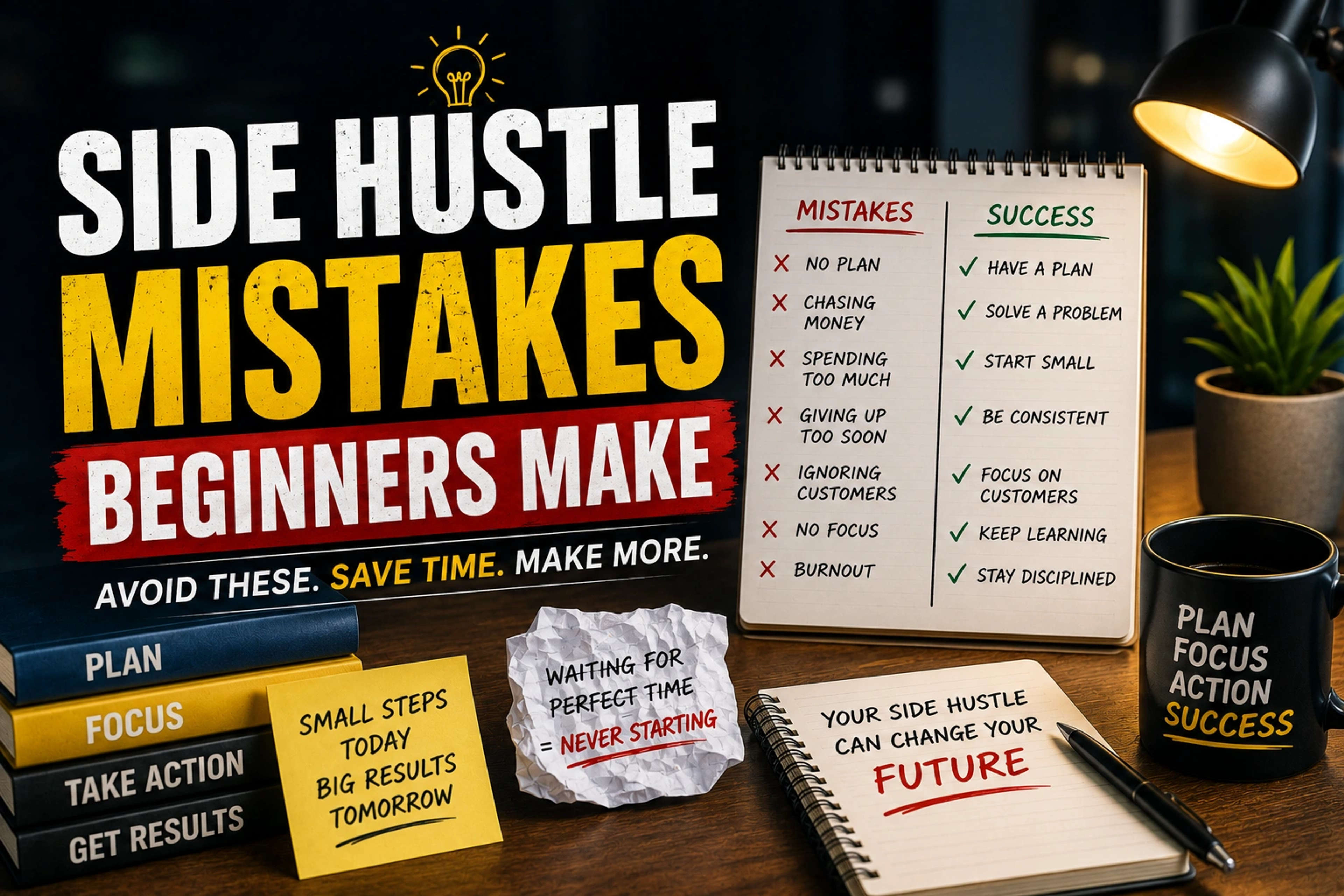
25 Side Hustles You Can Start This Weekend (Most With Little or No Experience)
Looking to earn extra income? Discover 25 legitimate side hustles you can start this weekend. Compare startup costs, earning potential, skills required, and practical steps to get started.

Key takeaway
Looking to earn extra income? Discover 25 legitimate side hustles you can start this weekend. Compare startup costs, earning potential, skills required, and practical steps to get started.
Some links are affiliate links. If you sign up we may earn a commission at no extra cost to you. See our disclosure. This is educational content, not financial advice.
Whether you're paying off debt, building an emergency fund, saving for something big or just want more money each month, a side hustle is one of the most practical ways to get there. You don't need a business degree, a big investment or months of planning to start. Many successful side hustles begin with skills people already have or can learn quickly; the key is picking one that fits your schedule, interests and long-term goals.
Keep your expectations realistic, though. A legitimate side hustle isn't a shortcut to instant wealth, and most take steady effort before they earn much. The people who succeed usually focus on providing value, improving their skills and staying consistent.
Below are 25 legitimate side hustles you can realistically start this weekend, with a comparison of their earning potential and help deciding which suits you.
Quick answer
If you're new to side hustles, start with one idea. Launching several at once usually leads to burnout and slower progress.
If you want to start earning as quickly as possible, service side hustles are generally the fastest route, because you're exchanging your skills or time for money. Some of the easiest to start this weekend are:
- Freelancing
- Virtual assistance
- Content writing
- Online tutoring
- Social media management
If you're willing to put in more time for potentially bigger long-term returns, consider:
- Blogging
- YouTube
- Affiliate marketing
- Selling digital products
- Print-on-demand
All 25 side hustles at a glance
| Sr No. | Side Hustle | Startup Cost | Time to First Income* | Difficulty | Long-Term Income Potential | Best For |
|---|---|---|---|---|---|---|
| 1 | Freelancing | Low | Days–Weeks | Easy | High | Skilled professionals |
| 2 | Virtual Assistant | Low | Days–Weeks | Easy | Medium–High | Beginners |
| 3 | Content Writing | Low | Days–Weeks | Easy | High | Writers |
| 4 | Graphic Design | Low | Days–Weeks | Medium | High | Creative professionals |
| 5 | Social Media Management | Low | Days–Weeks | Easy | High | Marketing enthusiasts |
| 6 | Online Tutoring | Low | Days–Weeks | Easy | High | Teachers & experts |
| 7 | Affiliate Marketing | Low | Weeks–Months | Medium | High | Content creators |
| 8 | Blogging | Low | Months | Medium | High | Writers |
| 9 | YouTube | Low | Months | Medium | High | Video creators |
| 10 | Sell Digital Products | Low | Weeks | Medium | High | Creators |
| 11 | Print-on-Demand | Low | Weeks | Medium | Medium–High | Designers |
| 12 | Sell Handmade Products | Medium | Days–Weeks | Medium | Medium | Crafters |
| 13 | AI-Assisted Services | Low | Days–Weeks | Medium | High | Professionals |
| 14 | Online Consulting | Low | Weeks | Medium | High | Industry experts |
| 15 | Resume & LinkedIn Services | Low | Days | Easy | Medium | HR & recruiters |
| 16 | Website Design | Low | Weeks | Medium | High | Web designers |
| 17 | SEO Services | Low | Weeks | Medium | High | Digital marketers |
| 18 | Video Editing | Low | Days–Weeks | Medium | High | Editors |
| 19 | Photography | Medium | Weeks | Medium | Medium | Photographers |
| 20 | Stock Photography | Low | Months | Easy | Medium | Creators |
| 21 | Voice-Over Work | Low | Days–Weeks | Medium | Medium | Voice talent |
| 22 | Podcast Editing | Low | Weeks | Medium | Medium | Audio editors |
| 23 | Translation Services | Low | Days–Weeks | Easy | Medium | Multilingual professionals |
| 24 | Data Entry | Low | Days | Easy | Low–Medium | Beginners |
| 25 | Build a Niche Newsletter | Low | Months | Medium | High | Content creators |
* Time to first income is an estimate based on typical cases and isn't guaranteed.
How to choose the right side hustle
Before putting your time into anything, ask yourself five questions.
How quickly do you need income? If you need money in the next few weeks, service side hustles like freelancing, tutoring or virtual assistance are usually the most practical. If you can wait several months for the chance of recurring income, content businesses like blogging or YouTube may suit you better.
What skills do you already have? Many people overlook skills they use every day at work. Writing emails, building spreadsheets, running social media, organising schedules and editing videos can all become paid services.
How much time can you commit? Be realistic. A side hustle that needs 20 hours a week may not be sustainable alongside a demanding full-time job.
Do you enjoy working with clients? Some side hustles involve regular client contact, while others are about making products or content. Pick a model that suits your personality.
Are you after short-term income or long-term wealth? Neither answer is wrong. Some people want cash now; others are happy to put in time today to build something that may earn for years.
1. Freelancing
Freelancing suits writers, developers, designers, marketers, accountants, translators, video editors and other skilled professionals. It's cheap to start and easy to moderately difficult; the first income can come within a few days or take several weeks, and the potential is high.
It's one of the fastest ways to earn extra money, because you're selling a skill you already have instead of building a product. Businesses of all sizes hire freelancers for short projects, ongoing work or specialist expertise, and as remote work grows, companies are increasingly comfortable working with independent professionals anywhere in the world. You choose which projects to take, what to charge and when to work, and as you gain experience, you can usually raise your rates and move into better-paid niches.
To get started this weekend:
- Pick one service you can offer confidently.
- Create three to five portfolio samples.
- Write a clear description of your service.
- Set up profiles on reputable freelance platforms or build a simple portfolio site.
- Apply for a few relevant opportunities each day.
It's cheap to start, the schedule is flexible, the long-term earning potential is strong and it can grow into a full-time business. Your first client can take a while, income may be uneven at first and you'll have to manage client relationships and deadlines. Specialise rather than calling yourself a general freelancer; "SEO content writer for finance websites" is usually more attractive to clients than just "content writer".
2. Virtual assistant
Virtual assistance suits organised people who enjoy admin. It's cheap and easy to start; the first income can come within days or a few weeks, and the potential is medium to high.
Virtual assistants handle everyday tasks business owners don't have time for. Depending on your skills, that can include email management, scheduling, customer support, research, travel planning, data entry, invoicing or scheduling social media posts. It's one of the most beginner-friendly side hustles, because many of the skills are ones you already use in office jobs, customer service or just organising your own life. With experience, you can specialise in areas like executive assistance, project management or operations support, which usually pay more.
To get started this weekend:
- List the admin tasks you can do confidently.
- Put together a simple service package.
- Prepare a professional resume or portfolio.
- Contact small businesses, entrepreneurs or agencies that need support.
It's easy to start, the hours are flexible and demand for remote support is growing. Some tasks get repetitive, and talking to clients is a big part of the job.
3. Content writing
Content writing suits writers, bloggers, students, journalists and anyone who enjoys researching and explaining ideas. It's cheap to start and easy to moderately difficult; the first income can come within a few days or take several weeks, and the potential is high.
It's one of the easiest online side hustles to start, because businesses always need good content for their websites, blogs, newsletters and marketing. Unlike many online business models, you don't need an audience before you can earn. If you can show you write well and communicate professionally, you can start working with clients fairly quickly. Companies publish new content every day to improve their search rankings, educate customers and generate leads, and many outsource it to freelance writers, which creates openings for beginners and experienced writers alike. If you already enjoy writing emails, explaining things or researching topics, it could be a great fit.
To get started this weekend:
- Choose one niche you're interested in, such as finance, technology, travel, health or AI.
- Write three high-quality sample articles to show your skills.
- Put together a simple portfolio in Google Docs or on a personal website.
- Prepare a short introduction explaining what you offer.
- Contact businesses, agencies and website owners looking for freelance writers.
It costs very little to start, the hours are flexible, you can work from anywhere, demand is high across many industries and it can grow into a full-time career. Building your first client base takes time, deadlines need good time management and your income depends on finding work consistently. Specialise rather than marketing yourself as a general writer; writers with expertise in finance, SaaS, healthcare or technology often charge more than generalists.
4. Graphic design
Graphic design suits creative people who enjoy making visual content. Startup costs are low to medium, it's moderately difficult, the first income usually comes within one to four weeks, and the potential is high.
Every business needs visual content: logos, social media graphics, presentations, ads, brochures and website banners all need professional design. Modern design tools make it easier than ever for beginners to learn. Mastering design takes time, but many businesses are happy to work with designers who produce clean, professional work and communicate well, and a strong portfolio usually matters more than formal qualifications.
To get started this weekend:
- Learn one design tool, such as Canva or Figma.
- Create 8–10 sample projects for made-up businesses.
- Build an online portfolio of your best work.
- Choose a niche, such as social media graphics, presentations or branding.
- Contact local businesses that would benefit from better visual branding.
Demand from businesses is strong, the work is creative and enjoyable, the schedule is flexible and you can specialise in well-paid niches. Competition can be stiff, clients may ask for several rounds of changes and building an impressive portfolio takes time. Focus on solving business problems rather than just making attractive designs; a design that improves conversions or gets a message across is worth far more than one that only looks nice.
5. Social media management
Social media management suits people who enjoy content, marketing and helping businesses grow online. It's cheap and easy to start; the first income can come within days or a few weeks, and the potential is medium to high.
Many small businesses know social media matters but don't have time to keep it up. As a social media manager, you plan content, schedule posts, reply to comments, track performance and help businesses build stronger relationships with their audience. Because businesses rely more and more on Instagram, Facebook, LinkedIn, TikTok, Pinterest and X, experienced social media managers stay in demand.
To get started this weekend:
- Choose one or two platforms to specialise in.
- Create a week of sample content for a made-up business.
- Learn how to use scheduling tools.
- Build a small portfolio.
- Contact local businesses whose social media accounts are inactive or patchy.
It's cheap to start, small businesses need it, you can work remotely and flexibly and it can grow into wider digital marketing services. You have to keep to posting schedules, trends change often and some clients expect fast results. Don't promise follower growth. Focus on things you can actually influence, such as engagement, consistency and content quality.
6. Online tutoring
Online tutoring suits teachers, college students, professionals and subject experts. It's cheap and easy to start; the first income can come within days or a few weeks, and the potential is medium to high.
If you know a subject other people want to learn, tutoring can be rewarding and pay well. Popular subjects include mathematics, science, languages, coding, music, business and test preparation. Unlike a course, tutoring lets you start earning almost straight away, because you're teaching live rather than building a product first, and students value personal guidance, so one-to-one tutoring never goes out of demand.
To get started this weekend:
- Decide which subject you'll teach.
- Write a simple lesson plan for beginners.
- Set up a professional profile and prepare a short introduction.
- Gather any teaching materials you need.
- Offer trial sessions to build confidence and collect testimonials.
It's a quick route to income, the schedule is flexible, the work is rewarding and many subjects are in high demand. Your income depends on your available hours, scheduling across time zones can be tricky and it takes patience and good communication. Start by teaching one subject very well rather than several at once; being known for one specialty often brings more referrals.
7. Affiliate marketing
Affiliate marketing suits bloggers, YouTubers, newsletter writers, website owners and other content creators. It's cheap to start and moderately difficult; the first income can take weeks or several months, and the potential is high.
You earn commissions by recommending products or services in your content: when someone buys through your referral link, you get a percentage of the sale. Unlike freelancing, you're not selling your time; you're making helpful content that can keep earning long after you publish it. It isn't a get-rich-quick business. Success depends on building trust with your audience, producing useful content and recommending products that really solve problems, and the most successful affiliate marketers focus on helping readers decide well rather than pushing products for commissions.
To get started this weekend:
- Choose a niche you're genuinely interested in.
- Set up a simple blog, YouTube channel or newsletter.
- Join reputable affiliate programmes in your niche.
- Create helpful content that answers common questions.
- Recommend products naturally where they're genuinely useful.
It's cheap to start, can bring recurring income, fits a flexible schedule and combines well with blogging, YouTube or newsletters. Income usually takes time to build, you have to keep making content and traffic is essential. Promote products you'd happily recommend to friends or colleagues; your audience's trust is worth far more than short-term commissions.
8. Blogging
Blogging suits writers, educators, professionals, hobbyists and anyone willing to build a long-term online business. It's cheap to start and moderately difficult; the first income usually takes 3–12 months, and the potential is very high.
Blogging is still one of the strongest online businesses you can start, even in 2026. Some people say blogging is dead, but good websites still attract millions of readers every month. A single article can keep bringing visitors for years, and where freelancing pays you once per project, a post can earn again and again through advertising, affiliate marketing, sponsored content, digital products and email marketing.
It isn't a quick way to make money. Search engines reward sites that consistently publish helpful, trustworthy content, and that reputation takes time to build. If you need income now, freelancing or tutoring may be better; if you're willing to build a long-term asset, blogging is one of the strongest options. Successful blogs focus on solving specific problems rather than covering everything, and a clear niche helps you attract the right audience and build authority. Popular niches include:
- Personal finance
- Technology
- AI tools
- Health and fitness
- Travel
- Home improvement
- Education
- Career development
- Food and recipes
To get started this weekend:
- Choose one niche you're genuinely interested in and can write about consistently.
- Buy a domain name and reliable hosting.
- Install a content management system such as WordPress.
- Publish five to ten high-quality articles before worrying about making money.
- Learn basic SEO so your content can rank over time.
It can bring several income streams, articles can keep earning for years, it's cheap to start, you own your platform and content and it builds your authority. It takes patience before it earns much, you have to publish consistently, search traffic is competitive and success depends on genuinely helpful content. Don't churn out hundreds of average articles; a smaller number of genuinely useful ones usually does better over the long term than a big pile of thin content.
9. YouTube
YouTube suits people who enjoy teaching, storytelling, reviewing products or making entertaining videos. Startup costs are low to medium, it's moderately difficult, the first income usually takes 3–12 months, and the potential is very high.
It's one of the best platforms for a long-term side hustle, because one video can attract viewers for years. Many people assume they need expensive cameras or a studio, but today's smartphones shoot good video, and what matters most is content that helps or entertains. Beyond ads, a growing channel can earn through affiliate marketing, sponsorships, memberships, digital products and online courses.
YouTube also builds trust: viewers hear your voice, see your personality and understand your expertise in a way writing alone often can't. Popular niches include:
- Personal finance
- Investing
- AI tools
- Product reviews
- Technology
- Education
- Business
- Productivity
- Cooking
- Fitness
Consistency usually matters more than perfection, and many successful channels started with simple equipment and improved over time.
To get started this weekend:
- Choose one topic you'll make videos about consistently.
- Plan your first five video ideas.
- Record on your smartphone if you don't have a camera.
- Learn basic editing.
- Publish consistently and focus on improving each video.
There are several ways to earn, the long-term potential is strong, you build a personal brand and videos can bring traffic for years. Editing can eat time, audiences often take months to grow and making videos consistently takes discipline. Your first videos won't be perfect, and that's fine; consistency and improvement matter more than expensive equipment.
10. Sell digital products
Digital products suit designers, writers, educators, creators and professionals with specialist knowledge. They're cheap to start and moderately difficult; the first income can take a few weeks or several months, and the potential is high.
This is one of the few side hustles where you make something once and sell it repeatedly with no stock or shipping. Digital products reach customers anywhere instantly, which makes them very scalable and cheap to run. Popular ones include:
- Ebooks
- Budget spreadsheets
- Resume templates
- Printable planners
- Notion templates
- Business templates
- Online courses
- Design assets
- Photography presets
- Digital artwork
The best digital products solve a specific problem. A budgeting spreadsheet that helps people track monthly expenses is worth more than a generic one with no clear purpose. A good product takes time to make, but it can keep selling long after you publish it.
To get started this weekend:
- Find a problem your target audience wants solved.
- Make one simple product rather than several small ones.
- Test it yourself before selling.
- Set up a storefront on a trusted marketplace or your own website.
- Promote it through blog posts, social media, newsletters or YouTube.
There's no stock to manage, running costs are low, you can reach customers worldwide, it can bring recurring income and it pairs well with blogging or YouTube. A quality product takes time to make, marketing is essential and many categories are competitive. Start with one product that solves one problem very well; adding more gets much easier once you know what your audience wants.
11. Print-on-demand
Print-on-demand suits designers, artists, creative entrepreneurs and anyone who wants to sell custom products without managing stock. It's cheap to start and moderately difficult; the first income can take a few weeks or several months, and the potential is medium to high.
Products are printed only after a customer orders, so you don't buy stock upfront or store and ship anything yourself. You create designs for things like T-shirts, hoodies, mugs, notebooks, tote bags, phone cases or posters, and when someone buys, your supplier prints, packs and ships the item directly to them. That makes the financial risk much lower than traditional retail.
Success depends less on beautiful artwork than on understanding your audience. Products for a specific niche, such as teachers, pet owners, hikers, gamers or fitness fans, often sell better than generic designs. Rather than uploading hundreds of random designs, make products people feel a connection to.
To get started this weekend:
- Choose a niche with an active audience.
- Research what people in that niche already buy.
- Create five to ten original designs.
- Connect your store to a reputable print-on-demand provider.
- Publish your products and promote them through social media or content.
There's no stock to buy, the financial risk is low, products ship automatically, new ideas are easy to test and it can grow into a long-term business. Margins are usually lower than making your own products, success depends heavily on marketing and popular niches are competitive. Don't try to sell to everyone; a store focused on one passionate niche usually beats a general merchandise store.
12. Sell handmade products
Handmade products suit artists, crafters, hobbyists and creative people who enjoy making physical things. Startup costs are medium, it's moderately difficult, the first income can come within days or several weeks, and the potential is medium.
If you enjoy making things by hand, turning the hobby into a side hustle can be enjoyable and profitable. Popular handmade products include:
- Candles
- Jewellery
- Home décor
- Personalised gifts
- Handmade soap
- Crochet items
- Woodwork
- Artwork
- Pottery
Many buyers will pay more for handmade products because they're unique and often personalised. Unlike print-on-demand, you make each item yourself. That limits how far you can scale, but it also lets you charge premium prices for quality craftsmanship, and as demand grows, you can add limited collections, custom orders or premium lines.
To get started this weekend:
- Decide which product to specialise in.
- Work out the cost of materials and packaging.
- Make several high-quality samples.
- Take professional-looking photos in natural light.
- List your products on trusted marketplaces or your own website.
You turn a hobby into income, unique products command premium prices, customers tend to be loyal and the work is creative and rewarding. Making things takes time, you have to manage stock and shipping physical products adds complexity. Good product photos can make a big difference to sales, so present your products professionally before spending money on ads.
13. AI-assisted services
AI-assisted services suit professionals who want to work faster and deliver more efficiently. They're cheap to start and moderately difficult; the first income can come within days or a few weeks, and the potential is high.
AI has changed how many businesses work, but it hasn't removed the need for skilled people. Successful freelancers don't sell "AI-generated work"; they use AI to work faster while adding their own expertise, judgment and creativity. Examples include:
- Content research
- Drafting emails
- Making presentations
- Workflow automation
- Data analysis
- Customer support help
- Marketing strategy
- Meeting summaries
Businesses aren't paying for AI itself. They're paying for accurate, reliable results delivered efficiently, which gives professionals who combine AI tools with real expertise an edge.
To get started this weekend:
- Choose one service you already understand.
- Learn how AI tools can speed up your work.
- Build sample projects that show the quality of your work.
- Explain clearly what you add beyond using AI.
- Focus on consistent, high-quality results.
It's very cheap to start, demand is growing across industries, you can deliver faster and it can raise your earnings. You have to keep learning, clients expect accuracy and quality and leaning too hard on AI can make your work less original. Never hand over AI-generated output without reviewing, editing and checking it; clients are paying for your expertise, not the software.
14. Online consulting
Online consulting suits experienced professionals, coaches, specialists and consultants. It's cheap to start and moderately difficult; the first income usually comes within a few weeks, and the potential is high.
If you've spent years building expertise in a field, consulting lets you earn from that knowledge without making products or working traditional hours. People and businesses look for consultants in areas such as:
- Marketing
- Human resources
- Career development
- Finance
- Sales
- Operations
- Business strategy
- Productivity
- Technology
Freelancers are hired to do tasks; consultants help clients make better decisions. Credibility is essential, and clients are more likely to hire someone who shows their expertise through articles, videos, case studies or talks.
To get started this weekend:
- Define one area of expertise.
- Identify the specific problems you help clients solve.
- Create a simple consulting package.
- Prepare a professional profile or website.
- Offer introductory sessions to build testimonials and referrals.
The earning potential is high, the schedule is flexible, you build a personal brand and it can lead to long-term client relationships. You need proven expertise, trust takes time to build and your first clients may take some networking. Market outcomes rather than credentials; clients usually care more about the results you can help them get.
15. Resume and LinkedIn optimisation
This suits recruiters, HR professionals, career coaches, experienced writers and anyone who knows how hiring works. It's cheap and easy to start; the first income can come within days, and the potential is medium.
Job seekers know a strong resume and LinkedIn profile improve their chances of getting interviews, but many struggle to present their experience well. If you understand hiring or have experience reviewing resumes, this side hustle can bring steady demand for very little outlay. Services can include:
- Resume writing
- LinkedIn profile optimisation
- Cover letters
- Interview preparation
- Career coaching
As your reputation grows, happy clients tend to recommend you to friends and colleagues, so referrals become an important source of work.
To get started this weekend:
- Create sample resumes for different industries.
- Set a simple pricing structure.
- Build a portfolio of before-and-after examples.
- Promote your services on professional networking platforms.
- Ask your first clients for testimonials.
It's cheap to start, a quick route to clients, has strong referral potential and combines well with career coaching. It needs attention to detail, hiring trends change and client expectations vary. Rather than offering only resume writing, create packages that include the resume, LinkedIn improvements and interview guidance; bundles are better value for clients and bring in more for you.
16. Website design
Website design suits creative people, freelancers, web designers, developers and anyone interested in helping businesses get online. Startup costs are low to medium, it's moderately difficult, the first income usually comes within one to four weeks, and the potential is high.
Almost every business needs a website. Restaurants, gyms, consultants and online shops all rely on professional sites to attract customers and look credible, but many owners don't have the time or technical knowledge to build one. That's an opening for freelancers who can build clean, responsive, easy-to-use websites.
You don't need to be an expert programmer to start. Modern website builders and content management systems let beginners build professional sites without writing thousands of lines of code, and as your skills grow, you can move into custom development and charge more. Website design also brings recurring income: after building a site, you can offer maintenance, updates, hosting management, SEO improvements and technical support.
To get started this weekend:
- Learn one platform, such as WordPress, Webflow or Shopify.
- Build three to five sample sites for made-up businesses.
- Create a portfolio of your best work.
- Put together simple website packages with clear pricing.
- Contact local businesses with outdated websites or none at all.
Demand is high across almost every industry, the long-term earning potential is excellent, you can earn monthly recurring income and the skills are valuable in many careers. Learning web design takes time, client revisions can be extensive and you have to keep up with new technology. Focus on solving business problems rather than just making attractive sites; a fast, easy-to-use website that helps a business get leads is worth far more than one that only looks impressive.
17. SEO services
SEO services suit digital marketers, writers, website owners and anyone interested in search engine optimisation. They're cheap to start and moderately difficult; the first income usually comes within two to six weeks, and the potential is high.
Search engine optimisation (SEO) helps businesses show up better in search results, so potential customers can find them more easily. Many small businesses know that ranking higher can bring more traffic and sales but lack the knowledge or time to optimise their sites. SEO services can include:
- Keyword research
- On-page optimisation
- Technical SEO
- Content strategy
- Internal linking
- Site audits
- Local SEO
- Performance improvements
Unlike paid advertising, SEO builds long-term organic traffic, which makes it an attractive investment for businesses and creates ongoing work for SEO professionals. Results usually take time, so setting realistic expectations with clients is essential.
To get started this weekend:
- Learn SEO fundamentals, including keyword research and on-page optimisation.
- Optimise your own website or a practice project.
- Record what you changed and the results.
- Build a simple SEO portfolio.
- Offer website audits to local businesses and point out what they could improve.
Demand from businesses is strong, the earning potential is high, clients often stay month after month and the skills complement blogging and content writing. Results are rarely immediate, search algorithms change regularly and you have to keep learning and testing. Never guarantee first-page rankings. Explain that SEO is a long-term strategy for improving visibility, traffic and user experience.
18. Video editing
Video editing suits creative people who enjoy storytelling, visual content and multimedia. Startup costs are low to medium, it's moderately difficult, the first income usually comes within one to four weeks, and the potential is high.
Video is one of the most popular forms of online content, and businesses, YouTubers, educators and marketers all need editors who can turn raw footage into polished, engaging videos. With short-form video growing on YouTube Shorts, Instagram Reels and TikTok, demand for skilled editors has risen a lot. A good editor does more than cut clips together: they improve the pacing, remove distractions, add transitions, clean up the audio and add captions so viewers stay engaged. As with graphic design, your portfolio usually matters more than formal qualifications.
To get started this weekend:
- Learn one professional editing program, such as DaVinci Resolve, Adobe Premiere Pro or Final Cut Pro.
- Download royalty-free practice footage.
- Edit three to five sample videos in different styles.
- Build a portfolio of your best work.
- Contact creators or businesses that publish video regularly.
Demand from creators and businesses is high, the work is creative and rewarding, you can specialise in well-paid niches and it can become a full-time freelance career. Editing can take a long time, you may eventually need powerful hardware and client revisions are common. Specialising in one kind of editing, such as YouTube videos, podcasts or short social clips, helps you stand out in a crowded market.
19. Photography
Photography suits creative people who enjoy taking pictures, telling stories and working with people or businesses. Startup costs are medium, it's moderately difficult, the first income usually comes within one to six weeks, and the potential is medium to high.
Photography is about helping people and businesses capture moments, tell stories and promote what they sell. Even with everyone carrying a smartphone, professional photographers are still in demand, because businesses and individuals value high-quality, professionally edited images. There are many niches, including:
- Portraits
- Products
- Real estate
- Events
- Food
- Travel
- Corporate
- Pets
Rather than serving every market, successful photographers usually specialise in one or two niches, which builds a stronger portfolio and makes it easier for clients to see what you're good at. Photography can also bring several income streams: besides client work, photographers sell prints, license images, make educational content or run workshops.
To get started this weekend:
- Decide which niche interests you most.
- Practise shooting in different lighting.
- Edit your best images into a small portfolio.
- Build an online gallery or portfolio site.
- Contact local businesses or individuals who may need professional photos.
The work is creative and rewarding, there are several ways to earn, demand is high in many industries and your portfolio grows in value over time. Camera gear can be expensive, income varies with bookings and editing takes extra time. Businesses need fresh product and brand photos throughout the year, so building relationships with local businesses can turn one-off jobs into regular work.
20. Stock photography
Stock photography suits photographers, travellers, hobbyists and creators who like building passive income. Startup costs are low to medium, it's easy to moderately difficult, the first income can take one to six months, and the potential is low to medium, though it can grow over time.
You license your images to businesses, publishers, marketers and creators. Instead of selling to clients directly, you upload your work to stock platforms where customers buy a licence whenever they need an image. It won't make you rich overnight, but a large, good-quality portfolio can earn for years. The most successful contributors shoot what businesses actually need rather than artistic photos with little commercial use, for example:
- Business meetings
- Remote work
- Technology
- Healthcare
- Education
- Food
- Travel destinations
- Home offices
- Lifestyle images
Quality, originality and relevance matter far more than uploading thousands of average photos.
To get started this weekend:
- Research the kinds of images businesses buy often.
- Sort your best photos into categories.
- Edit them to a professional standard.
- Add accurate titles, descriptions and keywords.
- Upload regularly to reputable stock marketplaces.
Images can earn recurring income, the schedule is flexible, photos you already have may be worth something and it complements client photography. Income usually builds slowly, competition is high and large portfolios tend to do better than small ones. Think like a business owner rather than an artist: would a company pay to use this image in its marketing? Commercial usefulness often matters more than artistic creativity.
21. Voice-over work
Voice-over work suits people with clear speaking voices, good communication skills and an interest in audio. Startup costs are low to medium, it's moderately difficult, the first income usually comes within one to four weeks, and the potential is medium to high.
Voice-over artists record audio for ads, YouTube videos, online courses, podcasts, audiobooks, apps, documentaries, corporate training and much more, and the growth of digital media has increased demand across many industries. You don't need a "radio voice"; many clients just want someone who sounds natural, trustworthy and easy to understand. With experience, you might specialise in:
- Commercial advertising
- E-learning courses
- Audiobooks
- Corporate training
- YouTube narration
- Podcast intros
- Animation
- Explainer videos
A portfolio of good demo recordings is one of the most important things for attracting clients.
To get started this weekend:
- Practise reading different kinds of scripts aloud.
- Record several sample demos.
- Improve your recording quality by cutting background noise.
- Create a simple online portfolio of your voice samples.
- Start applying for voice-over work and building client relationships.
You can do it entirely from home, demand is growing across many industries, you can specialise in different markets and the schedule is flexible. Recording quality matters, building a professional portfolio takes time and some projects need several revisions. Clients often choose voices that sound genuine and conversational over dramatic ones, so focus on clarity, confidence and natural delivery rather than imitating professional announcers.
22. Podcast editing
Podcast editing suits audio editors, video editors, musicians and anyone interested in audio production. Startup costs are low to medium, it's moderately difficult, the first income usually comes within one to four weeks, and the potential is medium to high.
Podcasting has become a major platform for businesses, educators, creators and entrepreneurs. Plenty of people enjoy recording podcasts; fewer enjoy editing them. A podcast editor improves the audio and gets episodes ready to publish: removing background noise, cutting unnecessary pauses, balancing levels, adding music or intros, inserting ads and exporting the finished episode in the right format. As podcasts become an important marketing channel, many creators would rather outsource the editing and focus on content. With experience, you can offer full podcast management, including publishing episodes, writing show notes, making social clips and scheduling content.
To get started this weekend:
- Learn the basics of audio editing in professional software.
- Download royalty-free audio and practise editing different kinds of recordings.
- Make several before-and-after samples to show your skills.
- Build a simple portfolio of your editing.
- Contact podcasters who publish regularly and offer your services.
Demand from creators and businesses is growing, you can work completely remotely, clients often stay month after month and it can grow into full podcast management. Audio editing needs attention to detail, professional software takes time to learn and clients may ask for changes before publishing. Offer extras such as episode titles, show notes, transcripts or short social clips; they can raise your earnings a lot without needing many more clients.
23. Translation services
Translation suits bilingual or multilingual people with strong language skills. It's cheap to start and easy to moderately difficult; the first income can come within days or a few weeks, and the potential is medium.
Businesses, publishers, software companies and creators regularly need documents, websites, apps and marketing material translated. Good translation is much more than swapping words between languages; good translators understand cultural context, tone, grammar and industry terminology so the result sounds natural. If you're fluent in more than one language, translation can be a reliable online side hustle with low startup costs. Many translators eventually specialise in areas such as:
- Legal documents
- Medical content
- Business communication
- Technical documentation
- Website localisation
- Marketing materials
Specialising often leads to better-paid work.
To get started this weekend:
- Decide which language pairs you'll offer.
- Translate several sample documents to show your ability.
- Build a professional portfolio.
- Decide whether to specialise in a particular industry.
- Start contacting businesses, agencies and translation platforms.
It's cheap to start, the schedule is flexible, demand comes from many industries and you can specialise and raise your rates. Accuracy is essential, industry terminology takes ongoing learning and some projects have tight deadlines. Even if you speak several languages, don't try to translate every kind of document; being known for one specialist area usually brings better-paying clients.
24. Data entry
Data entry suits beginners looking for flexible online work with few technical requirements. It's cheap and easy to start; the first income can come within days, and the potential is low to medium.
It involves organising, updating or moving information into spreadsheets, databases or business systems. It isn't one of the best-paid side hustles, but it can be a practical start for people new to online work who want remote experience. Typical tasks include:
- Updating spreadsheets
- Entering customer information
- Organising business records
- Formatting documents
- Basic online research
- Stock records
Legitimate data entry work usually needs very little investment, so be wary of opportunities that ask for big upfront payments or expensive training.
To get started this weekend:
- Improve your typing speed and accuracy.
- Get comfortable with spreadsheets and basic office software.
- Prepare a simple resume highlighting your organisational skills.
- Apply for legitimate remote data entry work.
- Check employers carefully before accepting anything.
It's beginner-friendly, costs almost nothing to start, the hours are flexible and it's a good introduction to remote work. It pays less than specialist services, some tasks get repetitive and scams are common. Treat it as a stepping stone rather than a long-term goal, and use the time to learn better-paid skills like bookkeeping, virtual assistance or spreadsheet automation.
25. Build a niche newsletter
A newsletter suits writers, industry experts, educators, bloggers and content creators. It's cheap to start and moderately difficult; the first income usually takes several months, and the potential is high.
A newsletter is one of the most valuable digital assets you can build, because you own the relationship with your audience. On social media, algorithms decide who sees your posts; with email, you reach subscribers who chose to hear from you. Successful newsletters focus on delivering value consistently rather than constantly promoting things. Popular topics include:
- Personal finance
- Investing
- AI tools
- Productivity
- Career advice
- Technology
- Small business
- Marketing
- Health
- Local news
As your list grows, a newsletter can earn through sponsorships, affiliate partnerships, paid subscriptions, digital products, consulting and online courses. Building an audience takes time, but newsletters often become one of the most stable and profitable long-term business models.
To get started this weekend:
- Choose a niche you know well.
- Define your ideal reader.
- Start a simple newsletter with a consistent schedule.
- Publish useful content before thinking about making money.
- Promote it through your website, social media or other platforms.
You own your audience, there are several ways to earn, running costs are low and it can support many other online businesses. Growing a list takes time, consistency is essential and you need useful content to keep readers. Don't try to cover every topic in your industry; a focused newsletter for a specific audience usually grows faster and builds stronger loyalty.
Key takeaways
- Many side hustles can be started with little or no money upfront.
- Service side hustles usually earn sooner than content businesses.
- Building valuable skills is one of the best long-term investments you can make.
- Focus on one side hustle before adding others.
- Ignore get-rich-quick promises and choose opportunities that provide real value.
Final thoughts
Starting a side hustle doesn't need the perfect idea. It needs action. The best side hustle is the one that fits your skills, your time and your long-term goals. Some can earn fairly quickly; others take months of steady effort before they pay off.
Rather than launching several at once, choose one that genuinely interests you and commit to learning, improving and providing value. As your confidence and experience grow, you can add more income streams. Successful side hustles are built on consistency, not shortcuts.
Frequently asked questions
What is the easiest side hustle to start?
Freelancing, virtual assistance, content writing, and online tutoring are among the easiest side hustles because they require little upfront investment and allow you to start offering services quickly.
Which side hustle has the highest earning potential?
Website design, SEO services, affiliate marketing, blogging, YouTube, consulting, and selling digital products have strong long-term earning potential. However, results depend on your skills, consistency, and the value you provide.
Can I start a side hustle while working full-time?
Yes. Many people begin by working evenings or weekends while keeping their regular job. Starting part-time reduces financial risk and allows you to build experience before considering a larger commitment.
Do I need money to start?
Many online side hustles require only a computer, internet connection, and the skills needed to provide value. Some opportunities may require software or equipment as your business grows.
Are online side hustles guaranteed to make money?
No. Earnings vary based on your experience, effort, market demand, pricing, and consistency. There are no guaranteed results, and you should be cautious of opportunities promising quick or effortless income.