AI Side Hustles Anyone Can Start
Discover practical AI side hustles you can start with little or no experience. Learn startup costs, earning potential, essential tools, and how to get your first clients

Key takeaway
Discover practical AI side hustles you can start with little or no experience. Learn startup costs, earning potential, essential tools, and how to get your first clients
Some links are affiliate links. If you sign up we may earn a commission at no extra cost to you. See our disclosure. This is educational content, not financial advice.
AI has changed how people work, make content and build businesses. Tasks that used to need specialist skills or expensive software can now be done much faster with AI tools, which has opened up ways to earn extra income without years of experience or a big upfront investment.
AI doesn't replace skills, though; it makes them go further. The people earning money with AI aren't just typing prompts into a chatbot. They use it to work faster, improve quality, automate repetitive tasks and solve real problems for clients and customers. Whether you're a student, an employee, a freelancer or starting a side business, AI can help you build extra income with fairly low startup costs.
This guide covers practical AI side hustles, the tools you'll need, startup costs, earning potential and how to get started.
Quick answer
Treat AI as your assistant, not your replacement. Human creativity combined with AI's speed is usually worth far more than either on its own. Here's how the side hustles compare:
| Side Hustle | Startup Cost | Difficulty | Income Potential |
|---|---|---|---|
| AI Content Writing | Low | Beginner | Medium to High |
| AI Graphic Design | Low | Beginner | High |
| AI Video Creation | Medium | Beginner | High |
| AI Social Media Management | Low | Intermediate | High |
| AI Presentation Design | Low | Beginner | Medium |
| AI Resume Writing | Low | Beginner | Medium |
| AI Ebook Publishing | Low | Intermediate | High |
| AI Prompt Selling | Low | Beginner | Medium |
| AI Website Content | Low | Intermediate | High |
| AI Virtual Assistant | Low | Beginner | Medium |
Before you start
Understand what clients actually pay for. Nobody pays for AI. They pay for:
- Better content.
- Faster delivery.
- Time saved.
- Better designs.
- Better marketing.
- Better business results.
AI just helps you deliver those more efficiently. The more value you create, the more work you'll find.
1. AI content writing
This suits writers, bloggers, marketers and beginners. It costs little to start, it's beginner-friendly, and the income potential is medium to high. Businesses always need:
- Blog articles
- Website copy
- Product descriptions
- Email newsletters
- Social media captions
AI tools speed up drafting a lot, but clients still expect human editing, fact-checking and original thinking. Successful AI-assisted writers don't paste AI output; they turn it into polished, accurate and engaging work.
Useful tools include ChatGPT, Claude, Google Gemini, Grammarly and Perplexity. You can find clients on freelance marketplaces and LinkedIn, through cold email, and by approaching small business owners and marketing agencies.
2. AI graphic design
This suits creative beginners and freelancers. Startup costs are low, it's beginner-friendly and the income potential is high. Modern AI image generators can help you make:
- Social media graphics
- YouTube thumbnails
- Marketing banners
- Ebook covers
- Presentation graphics
- Website illustrations
Clients usually want someone who understands branding and visual communication, not just someone who can generate an image, so learning basic design principles alongside the tools makes a big difference. Useful tools include ChatGPT Images, Midjourney, Adobe Firefly, Canva AI and Ideogram.
3. AI video creation
This suits content creators and marketers. Startup costs are medium, it's beginner-friendly and the income potential is high. Businesses increasingly need short videos for:
- YouTube
- TikTok
AI tools can help with:
- Scriptwriting
- Voice generation
- Video editing
- Captions
- B-roll
- Thumbnail ideas
Offering complete video packages rather than single services makes you more valuable. Useful tools include CapCut AI, Runway, Veo, Pika and ElevenLabs.
4. AI social media management
This suits organised people who enjoy marketing. Startup costs are low, the difficulty is intermediate and the income potential is high. Many small businesses don't have time to post consistently, and with AI you can help them by creating:
- Monthly content calendars
- Captions
- Hashtag research
- Image ideas
- Video scripts
- Replies to comments and messages
Rather than selling individual posts, offer monthly management packages. Recurring clients make your income more predictable.
5. AI resume and LinkedIn optimisation
This suits professionals and people with an interest in HR. Startup costs are low, it's beginner-friendly and the income potential is medium. Job seekers often struggle to write resumes that show off their skills. AI can produce a strong first draft, but your value comes from tailoring resumes to specific industries, improving the formatting and highlighting achievements well. Adding LinkedIn profile optimisation makes it a more complete service.
6. AI presentation design
This suits students, educators, consultants and businesses. Startup costs are low, it's beginner-friendly and the income potential is medium. Many professionals need presentations but don't have time to design them. AI tools can help generate:
- Slide outlines
- Speaker notes
- Graphics
- Charts
- Visual layouts
You could design presentations for:
- Business meetings
- Sales pitches
- Investor decks
- School projects
- Training sessions
Clients usually care more about clarity and a professional look than flashy animations.
7. AI ebook publishing
This suits writers and content creators. Startup costs are low, the difficulty is intermediate and the income potential is high. Instead of selling your time, you make digital products that keep earning. Examples include:
- Study guides
- Travel planners
- Fitness journals
- Budget templates
- Business checklists
- Educational ebooks
AI can help with research, outlining, drafting, proofreading and formatting. Always review and improve the content so it gives buyers real value.
8. AI prompt writing and selling
This suits creative thinkers and AI enthusiasts. Startup costs are low, it's beginner-friendly and the income potential is medium. As AI tools spread, many people struggle to write prompts that get good results. If you can consistently write prompts that save people time or improve their output, you can turn that into a business. You could write prompts for:
- Marketing campaigns
- Blog writing
- AI image generation
- YouTube scripts
- Business planning
- Email marketing
- Resume writing
- Coding help
Rather than selling single prompts, package them into collections for a specific niche, such as:
- A real estate prompt bundle
- An Etsy seller prompt pack
- A student study prompt library
- A social media content prompt kit
Digital products like these can keep earning long after you make them. Useful tools include ChatGPT, Claude, Gemini, Notion and Gumroad.
9. AI website content services
This suits writers and marketers. Startup costs are low, the difficulty is intermediate and the income potential is high. Every business needs website content, including:
- Home pages
- About pages
- Service pages
- Landing pages
- Product descriptions
- FAQs
- Blog articles
AI speeds up research and drafting, while your expertise makes sure the final content is accurate, engaging and true to the client's brand. Rather than offering "AI writing", market yourself as helping businesses communicate better online.
10. AI virtual assistant services
This suits organised people. Startup costs are low, it's beginner-friendly and the income potential is medium. Virtual assistants increasingly use AI to get admin done faster. Typical tasks include:
- Drafting emails
- Managing calendars
- Writing meeting summaries
- Research
- Organising data
- Drafting customer support replies
- Travel planning
AI lets you get through routine work faster, so you can support more clients without the quality slipping. Businesses aren't hiring AI; they're hiring someone who knows how to use it well.
11. AI online course creation
This suits professionals and educators. Startup costs are low, the difficulty is intermediate and the income potential is high. If you're an expert in a subject, AI can speed up producing a course. It can help with:
- Course outlines
- Lesson plans
- Quizzes
- Presentation slides
- Worksheets
- Video scripts
Students pay for your knowledge and teaching, though, not AI-generated content on its own. Focus on clear explanations, practical examples and lessons people can act on.
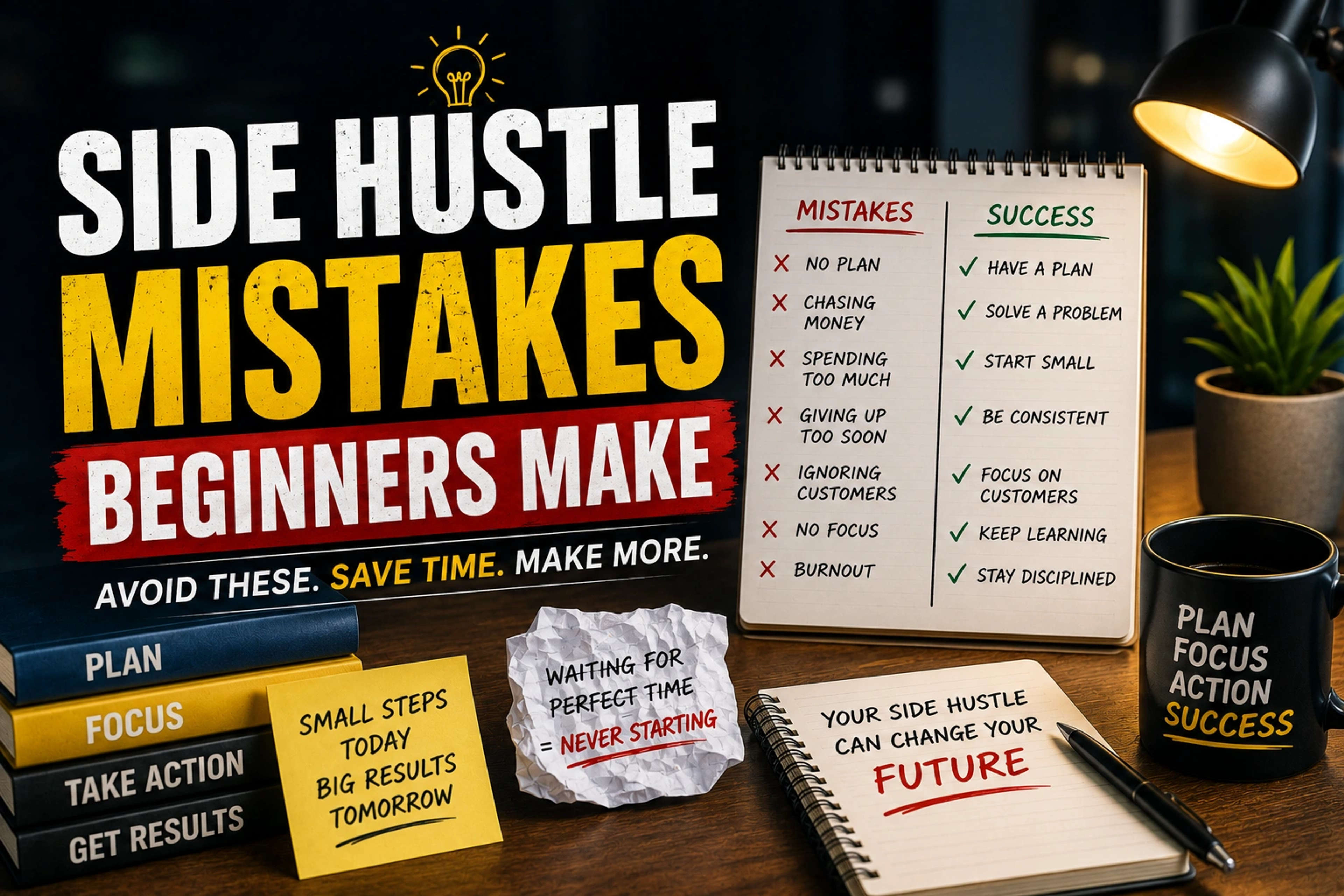
Common beginner mistakes
Relying entirely on AI. Clients expect quality, not unedited AI output, so always review and improve your work.
Trying every AI tool. New tools appear almost every week. Get good at a few reliable ones before adding more.
Competing only on price. The lowest prices often attract the most difficult clients. Compete on results instead.
Ignoring copyright and licensing. Understand the licensing terms of the tools you use, especially for commercial work for clients.
Not building a portfolio. Even before you have paying clients, make sample projects that show what you can do. A strong portfolio builds trust and makes your first projects easier to win.
How to get your first AI clients
Finding clients is often harder than learning the tools. The good news is that many businesses are actively looking for people who can save them time.
Start with your existing network. Friends, family, former colleagues and local businesses may already need help with content, marketing or design, and your first client often comes from someone who already knows and trusts you.
Build a small portfolio. Clients want proof you can deliver. Make sample projects such as:
- Blog articles
- Social media graphics
- AI-generated videos
- Website landing pages
- Presentation slides
- Marketing emails
Even personal projects show what you can do.
Join freelance platforms. Freelance marketplaces are still one of the easiest ways to gain experience. Popular ones include:
- Upwork
- Fiverr
- Freelancer
- PeoplePerHour
Competition can be stiff, but a few successful projects build your credibility.
Use LinkedIn. It's a good place to reach business owners and decision-makers. Share:
- Before-and-after examples
- Productivity tips
- Case studies
- Demonstrations of your AI workflow
- Educational content
Posting useful content consistently helps establish you as an expert.
Reach out to small businesses. Many know they should improve their marketing but lack the time or resources. Instead of generic sales messages, explain how you'd solve a specific problem for them, such as improving their website content, keeping their social media consistent, designing marketing graphics or producing short videos. Businesses care more about results than the technology behind them.
How much can you charge?
Pricing depends on:
- Experience.
- Industry.
- Complexity.
- Turnaround time.
- Deliverables.
Don't price based on how quickly AI helps you finish. Clients pay for the value you deliver, not the hours you spend. As you gain experience, consider moving from hourly rates to project fees or monthly retainers. Recurring clients give you more predictable income than one-off projects.
Skills that increase your income
AI tools keep getting easier for everyone to use, so the skills that stay valuable are the ones AI can't fully replace. Work on:
- Communication
- Copywriting
- Marketing
- Design principles
- Critical thinking
- Problem-solving
- Sales
- Client management
- Project organisation
Combining these with AI gives you a much stronger edge than relying on AI alone.