Money Leaks You Probably Ignore (But That Quietly Drain Your Budget)
Discover the hidden money leaks that quietly drain your budget every month. Learn how to identify them, stop overspending, and save more without earning more.
Key takeaway
Discover the hidden money leaks that quietly drain your budget every month. Learn how to identify them, stop overspending, and save more without earning more.
Some links are affiliate links. If you sign up we may earn a commission at no extra cost to you. See our disclosure. This is educational content, not financial advice.
Most people think they're careful with money because they avoid expensive purchases. The bigger drain on your finances is often small recurring spending that slips out every week without you noticing, more than a luxury holiday or a new car.
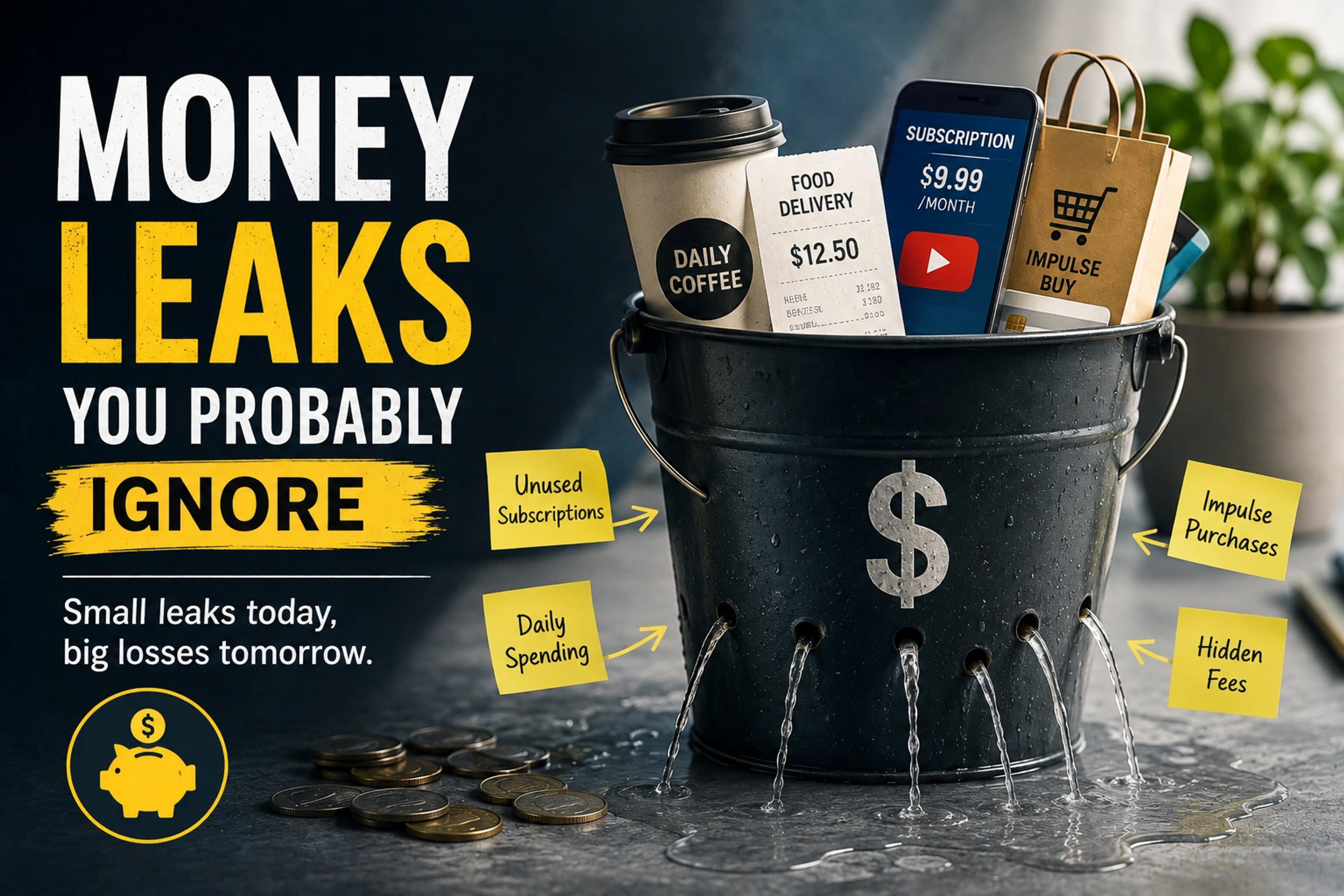
These money leaks rarely feel important on their own. A subscription here, a delivery fee there, an impulse buy during an online sale. Over months and years, though, they can add up to hundreds or even thousands of dollars you could have saved, invested or put toward your goals. Fixing them usually doesn't mean earning more, just paying closer attention to where your money goes.
Here are the most common hidden money leaks and practical ways to plug them without feeling deprived.
Quick answer
Improving your finances isn't always about earning more. Often it's about keeping more of what you already earn. You probably have money leaks if you:
- Regularly wonder where your paycheck went.
- Struggle to save despite a steady income.
- Often buy things on impulse.
- Pay for subscriptions you rarely use.
- Rely on food delivery or convenience purchases.
- Put everyday spending on a credit card without tracking it.
If any of these sound familiar, a few of your spending habits are worth a look.
What is a money leak?
A money leak is a recurring expense or habit that slowly holds back your finances without giving you much in return. Unlike big purchases, money leaks are small, frequent and easy to miss until they've piled up. Because each one feels trivial, many people never realise how much they lose over a year.
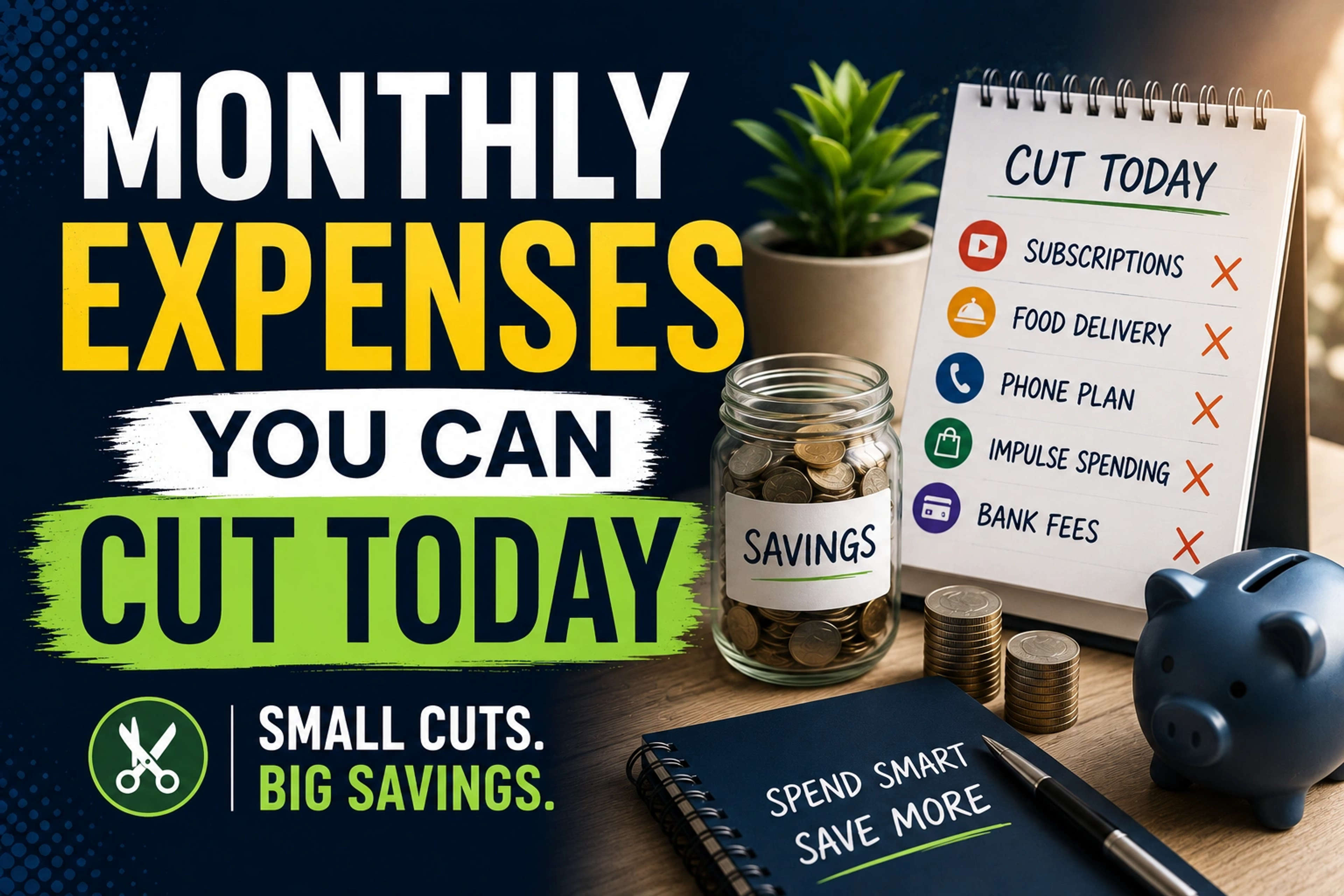
1. Forgotten subscriptions
Streaming services, cloud storage, fitness apps, music platforms and software subscriptions all renew automatically, so it's easy to keep paying for things you rarely use.
Go through your bank and credit card statements every few months and cancel anything you no longer use or really enjoy.
2. Daily convenience spending
Coffee every morning, snacks from the petrol station, ordering lunch because cooking feels like a hassle. None of these is expensive on its own, but together they can take a big share of your monthly budget.
You don't have to give up every treat. Just do it less often, for example by making lunch at home a few more days a week or brewing coffee before you leave for work.
3. Food delivery fees
Delivery apps make life easier, and they also raise the cost of every meal through:
- Delivery fees.
- Service charges.
- Higher menu prices.
- Tips.
A meal that's reasonably priced at the restaurant can cost a lot more once those are added. Keep delivery for times when the convenience really matters, and cook at home more often.
4. Impulse online shopping
One-click ordering and personalised recommendations make it very easy to buy things you hadn't planned on. Many impulse buys only satisfy you briefly and end up sitting unused a few weeks later.
Try a 24-hour waiting rule. If you still want the item after a day, you can decide with a clearer head.
5. Small bank fees
Monthly maintenance fees, ATM charges, overdraft fees and foreign transaction fees each look minor, but repeated through the year they eat into your savings. Review what your bank charges you and consider switching to an account that suits you better.
6. Wasted food
Buying groceries is necessary; throwing them away isn't. Expired produce, forgotten leftovers and overbuying all raise your grocery bill for nothing. Plan meals before you shop, buy only what you'll use before it spoils, and turn leftovers into tomorrow's lunch.
7. Credit card interest
One of the most expensive leaks isn't a purchase at all. When you carry a credit card balance, you pay extra simply because you didn't pay in full, and over time the interest can cost more than the original purchase.
Whenever you can, pay your balance in full by the due date. If you're already carrying debt, make a plan to pay it down steadily.
8. Buying because something is on sale
A discount isn't a saving if you never meant to buy the item, and sales often get people to spend money they would otherwise have kept. Ask yourself whether you'd buy it at full price. If not, the discount probably isn't saving you anything.
9. Lifestyle inflation
As income rises, spending tends to rise with it: a nicer phone, a more expensive car, eating out more, better holidays. Enjoying your success is perfectly reasonable, but raising your spending every time your income grows makes it hard to build wealth.
When you get a raise, consider sending part of the extra money toward:
- Savings.
- Investing.
- Paying down debt.
That way your financial progress grows along with your income.
10. Not tracking your spending
The biggest leak of all may be not knowing where your money goes. Without tracking, it's hard to spot the habits that are draining you.
Spend a few minutes each week looking over your spending. You don't need a complicated spreadsheet; a simple budgeting app or a notebook is enough to make you more aware of your habits.
How to find your own money leaks
Everyone's habits are different, so the best way to find yours is to go through your spending for the last two or three months. Look for:
- Recurring subscriptions.
- Frequent small purchases.
- Convenience spending.
- Unexpected fees.
- Impulse purchases.
- Categories that keep going over budget.
Mark the expenses that don't make your life noticeably better. Those are usually the easiest places to save.
Key takeaways
- Small expenses often matter more in the long run than occasional big purchases.
- Review subscriptions and recurring payments regularly.
- Cut back on convenience spending where it makes sense.
- Avoid impulse buys by giving yourself a waiting period.
- Track your spending to find hidden leaks.
- Saving more doesn't always mean earning more.
Final thoughts
Money leaks rarely get noticed because they happen quietly. One small purchase, a monthly subscription or an occasional delivery fee doesn't seem important, but repeated month after month they can slow your progress a lot.
You don't need to cut every expense you enjoy. Keep the spending that really improves your life and reduce the rest. Plug a few hidden leaks and you may find saving gets much easier, without feeling like you're always going without.