21 Passive Income Ideas You Can Start With Under $100
Looking to build passive income without spending thousands? Discover 21 realistic passive income ideas you can start with under $100, including startup costs, earning potential, and practical tips.

Key takeaway
Looking to build passive income without spending thousands? Discover 21 realistic passive income ideas you can start with under $100, including startup costs, earning potential, and practical tips.
Some links are affiliate links. If you sign up we may earn a commission at no extra cost to you. See our disclosure. This is educational content, not financial advice.
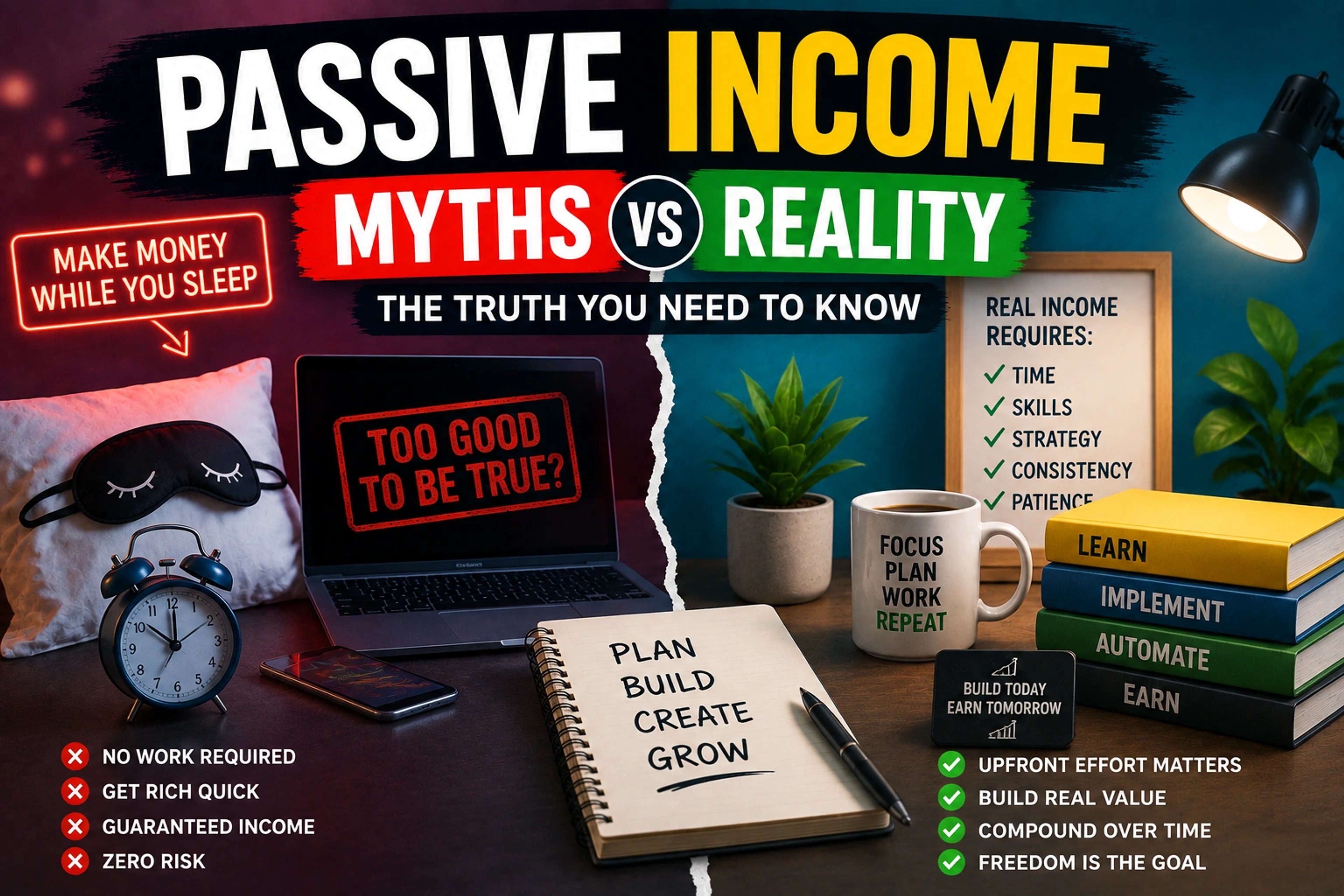
If you've ever searched for ways to earn passive income, you've probably seen headlines promising thousands of dollars a month for almost no effort. The reality is quite different.
Most passive income streams need an upfront investment of time, money, skills or all three. What makes them passive isn't that they need no work; it's that once you've built the asset, it can keep earning without you trading every hour for money.
You don't need thousands of dollars to start, though. Many popular passive income ideas can be launched for under $100, which puts them within reach of students, working professionals, freelancers and anyone who wants another source of income. That budget can cover a domain name, web hosting, basic software, the materials for a digital product or simple tools to help you build an income-producing asset.
Money is only part of it. Your willingness to learn, stay consistent and make something genuinely useful will matter far more to your long-term success than whether you spend $50 or $500. Below are 21 realistic passive income ideas you can start for under $100, with startup costs, earning potential, pros and cons and practical first steps.
Quick answer
Think of passive income as building an asset, not buying a shortcut; the more useful the asset, the more it can earn over time. These are some of the strongest ideas you can start for under $100:
- Affiliate marketing
- Blogging
- YouTube
- Digital products
- Canva templates
- Notion templates
- Print-on-demand
- Online courses
- Stock photography
- Stock videos
- AI prompt packs
- Printable planners
- Spreadsheet templates
- Dividend investing
- High-yield savings accounts*
- Website flipping
- Micro SaaS
- Music licensing
- Publishing an ebook
- A niche newsletter
- Digital design assets
Each has different startup requirements, earning potential and timeframes. Some can start earning within weeks; others are long-term assets designed to bring in money for years.
All 21 ideas compared
| # | Passive Income Idea | Startup Cost | Time to First Income* | Difficulty | Long-Term Income Potential | Best For |
|---|---|---|---|---|---|---|
| 1 | Affiliate Marketing | Low | Weeks–Months | Medium | Very high | Content creators |
| 2 | Blogging | Low | Months | Medium | Very high | Writers |
| 3 | YouTube | Low | Months | Medium | Very high | Video creators |
| 4 | Digital Products | Low | Weeks | Medium | Very high | Creators |
| 5 | Canva Templates | Low | Weeks | Easy | High | Designers |
| 6 | Notion Templates | Low | Weeks | Easy | High | Productivity enthusiasts |
| 7 | Print-on-Demand | Low | Weeks | Medium | High | Designers |
| 8 | Online Courses | Low | Months | Medium | Very high | Experts |
| 9 | Stock Photography | Low | Months | Easy | Medium | Photographers |
| 10 | Stock Videos | Low | Months | Medium | High | Videographers |
| 11 | AI Prompt Packs | Low | Weeks | Easy | High | AI users |
| 12 | Printable Planners | Low | Weeks | Easy | High | Designers |
| 13 | Spreadsheet Templates | Low | Weeks | Easy | High | Excel users |
| 14 | Dividend Investing | Low | Months–Years | Easy | Medium | Investors |
| 15 | High-Yield Savings Account** | Low | Immediate | Easy | Low | Conservative savers |
| 16 | Website Flipping | Low | Months | Medium | High | Website builders |
| 17 | Build a Micro SaaS | Medium | Months | Hard | Very high | Developers |
| 18 | License Music | Low | Months | Medium | High | Musicians |
| 19 | Publish an eBook | Low | Weeks | Easy | High | Writers |
| 20 | Build a Niche Newsletter | Low | Months | Medium | Very high | Content creators |
| 21 | Sell Digital Design Assets | Low | Weeks | Medium | High | Designers |
* Time to first income is an estimate based on typical cases and isn't guaranteed.
** Availability and returns for high-yield savings accounts vary by country and institution.
What is passive income?
Passive income is money from an asset or investment that keeps coming in after the initial work is done. That doesn't make it automatic. Almost every passive income stream takes effort upfront:
- Writing an ebook takes days or weeks.
- A blog may take months before it attracts visitors.
- Recording a course takes planning, filming and editing.
- Designing templates or digital products takes creativity and testing.
Once those assets exist, though, they can keep earning with relatively little ongoing effort compared with a job. It's a bit like planting a tree: you prepare the soil, plant the seed and look after it, and eventually it bears fruit year after year. The work comes first, and the rewards usually come later.
Passive income vs active income
Knowing the difference helps set realistic expectations.
| Active Income | Passive Income |
|---|---|
| You earn money by actively working. | You earn money from assets you've created or invested in. |
| Income usually stops when you stop working. | Income can continue after the initial work is completed. |
| Limited by available working hours. | Can become more scalable over time. |
| Examples: Salary, freelancing, consulting, tutoring. | Examples: Blogs, digital products, dividend investments, online courses. |
Many entrepreneurs combine the two. A freelance designer might earn active income from client work while selling Canva templates or digital planners that bring in passive income every month. That gives you cash now while you gradually build long-term assets.
Can you really build passive income with $100?
Yes, as long as you understand what the $100 is buying. You're not buying passive income; you're buying the tools to build something that earns. Your budget might go on:
- A domain name.
- Website hosting.
- A decent microphone.
- Simple design software.
- Product mockups.
- A business website.
- Marketing your first digital product.
How much you spend usually matters far less than the value you create. Someone who spends $40 making an excellent budgeting spreadsheet that solves a real problem may earn much more over time than someone who spends $500 on software and never finishes a product. Likewise, someone who publishes helpful blog articles consistently for a year is usually better placed than someone who buys expensive tools and gives up after a few weeks. Passive income rewards patience and consistency, so don't wait for a bigger budget. Start with the tools you need now, improve your skills over time and reinvest what you earn.
1. Affiliate marketing
Affiliate marketing suits bloggers, YouTubers, newsletter writers, niche website owners and other content creators. It's cheap to start and moderately difficult; the first income can take weeks or several months, and the potential is high.
It's one of the most popular passive income strategies because you earn commissions by recommending products or services without making your own. You partner with companies that already sell something, and when someone clicks your referral link and makes a qualifying purchase, you earn a commission. Your main job is making useful content that helps people decide, such as product reviews, buying guides, tutorials, comparisons or videos showing how a product works. As that content keeps attracting visitors from search or social media, it can keep earning commissions long after you publish it.
It isn't passive from day one. You'll need to build an audience, create helpful content and earn your readers' trust, and the most successful affiliate marketers focus on solving problems rather than selling products.
To get started:
- Choose a niche you're genuinely interested in.
- Set up a simple blog, YouTube channel or newsletter.
- Join reputable affiliate programmes in your niche.
- Publish content that answers questions people are actually searching for.
- Recommend products only when they really help the reader.
It's very cheap to start, involves no stock or customer support, can bring recurring income, works alongside blogs, YouTube and newsletters and has no ceiling as your audience grows. Traffic takes time to build, income is never guaranteed, success depends on trust and good content and some niches are very competitive. Promote products you'd happily recommend to a friend; long-term trust is worth far more than the highest commission rate.
2. Start a blog
Blogging suits writers, educators, professionals, hobbyists and anyone willing to build a long-term online business. It's cheap to start and moderately difficult; the first income usually takes 3–12 months, and the potential is very high.
Every article you publish becomes a digital asset. Freelancing pays you once per project, while a well-written post can keep attracting visitors and earning for years. A blog can make money from:
- Affiliate marketing
- Display advertising
- Sponsored content
- Digital products
- Online courses
- Memberships
- Email marketing
You also own the platform. Social media algorithms keep changing; your website is an asset you control. Blogging does take patience. Search engines reward sites that consistently publish helpful, accurate, trustworthy content, and most blogs take months rather than weeks to get meaningful traffic. Pick a niche you enjoy and can write about for years, and become known for solving problems in that one area. Evergreen niches include:
- Personal finance
- AI and productivity
- Technology
- Health and wellness
- Career development
- Home improvement
- Travel
- Education
- Small business
Once readers start arriving, every new article strengthens the site and opens up more ways to earn.
To get started:
- Choose a niche you can write about for the next several years.
- Register a domain name and buy reliable hosting.
- Install a blogging platform such as WordPress.
- Publish your first five to ten high-quality articles.
- Learn basic SEO so your content can rank in search engines.
You get several income streams, articles that can bring traffic for years, low startup costs, a website you own and authority in your niche. Results take time, you have to publish consistently, SEO can be competitive and income isn't guaranteed. One excellent article a week usually beats several average ones; good evergreen content tends to outperform sheer volume over the long run.
3. Start a YouTube channel
YouTube suits educators, reviewers, creators, storytellers and anyone comfortable making videos. It's cheap to start and moderately difficult; the first income usually takes 3–12 months, and the potential is very high.
It's one of the few platforms where a single video can keep attracting viewers and earning for years. Many beginners think they need expensive cameras or a studio, but useful content matters far more than equipment, and many successful creators started on a smartphone and upgraded only once their channel grew. A channel can earn from:
- Advertising
- Affiliate marketing
- Brand sponsorships
- Digital product sales
- Online courses
- Memberships
One of YouTube's biggest strengths is discoverability: videos keep turning up in search and recommendations months or years after you publish them. Consistency matters; one helpful video a week usually works better than several in one month and then nothing. Popular niches include:
- Personal finance
- AI tools
- Investing
- Product reviews
- Technology
- Education
- Productivity
- Fitness
- Cooking
If you don't want to be on camera, plenty of successful channels use screen recordings, animation, slides, tutorials or voiceovers instead.
To get started:
- Choose one niche you'll make videos about consistently.
- Brainstorm your first ten video ideas.
- Record your first video with the equipment you already have.
- Learn basic editing.
- Publish consistently and improve with each video.
The long-term income potential is strong, there are several ways to earn, you build a personal brand and videos can bring traffic for years. Audiences take time to grow, editing can eat time, you have to be consistent and many niches are competitive. Don't chase viral videos; make evergreen content that answers questions people will keep searching for.
4. Sell digital products
Digital products suit designers, writers, educators, creators and professionals with specialist knowledge. They're cheap to start and moderately difficult; the first income can take several weeks or months, and the potential is high.
This is one of the closest business models to true passive income: you make the product once and sell it repeatedly, with no stock, packaging or shipping, and customers anywhere can buy and download it within minutes. Popular digital products include:
- Ebooks
- Budget spreadsheets
- Printable planners
- Business templates
- Financial calculators
- Design assets
- Checklists
- Online guides
- Notion templates
The most successful ones solve one specific problem very well. A budgeting spreadsheet built for freelancers is often worth more than a generic one because it's tailored to a particular audience. A good product takes real time and effort to make, but each extra sale usually needs little work, and your earning potential grows with your range.
To get started:
- Find a problem your audience wants solved.
- Make one high-quality digital product.
- Test it thoroughly before selling.
- Set up an online store or marketplace listing.
- Promote it through your blog, newsletter, YouTube channel or social media.
There's no stock to manage, running costs are low, sales are unlimited, you can reach customers worldwide and it's easy to scale by adding products. Marketing is essential, popular categories are competitive and a good product takes upfront effort. One outstanding product that customers recommend to others is worth more than ten average ones.
5. Sell Canva templates
Canva templates suit graphic designers, marketers, social media managers and creative entrepreneurs. They're cheap and easy to start; the first income usually comes within one to eight weeks, and the potential is medium to high.
Canva is one of the world's most widely used design platforms, so there's strong demand for professionally designed templates that save people time. Businesses, educators, creators and entrepreneurs regularly buy templates for:
- Social media posts
- Presentations
- Business proposals
- Media kits
- Planners
- Workbooks
- Resumes
- Marketing materials
- Ebooks
Unlike client work, a template can be sold again and again without more design work. The key is making templates that help a specific audience get a task done faster. Instead of generic Instagram templates, design for:
- Real estate agents
- Financial advisers
- Fitness coaches
- Teachers
- Restaurants
- Wedding planners
Specialised products usually face less competition and are worth more to buyers.
To get started:
- Choose one audience to design for.
- Research the templates they use most.
- Create a professional collection.
- Test every template before publishing.
- Sell through reputable digital marketplaces or your own website.
They're very cheap to start, can be sold repeatedly, need no shipping or stock, face growing demand from businesses and are easy to expand into larger collections. The marketplace is competitive, design skills improve your chances and you still need to market them. Sell bundles rather than single designs; they're better value for customers and raise your average sale.
6. Sell Notion templates
Notion templates suit productivity fans, students, professionals, creators and anyone who enjoys building organised digital systems. They're cheap and easy to start; the first income usually comes within one to eight weeks, and the potential is medium to high.
Notion is one of the most popular tools for managing projects, tracking goals, organising notes and running businesses. Millions of people use it every day, and many would rather buy a well-designed template than build a system from scratch. Popular templates include:
- Budget trackers
- Personal finance dashboards
- Habit trackers
- Student planners
- Business CRMs
- Content calendars
- Project management systems
- Job application trackers
- Reading journals
The best templates solve one problem very well rather than trying to do everything. A "Freelancer Finance Dashboard" for tracking invoices, expenses, taxes and monthly income will attract a more targeted audience than a generic workspace. Once it's finished, you can sell it repeatedly without remaking it.
To get started:
- Find a productivity problem people run into regularly.
- Build a clean, beginner-friendly template.
- Test it thoroughly so every feature works.
- Make attractive preview images showing how it's organised.
- Sell it through your own website or a trusted marketplace.
They're cheap to start, need no stock or shipping, face growing demand, are easy to update and can bring recurring sales. You need to know Notion well, popular categories are competitive and marketing still matters. Design for specific professions, such as freelancers, students, real estate agents or small business owners, rather than for everyone.
7. Start a print-on-demand business
Print-on-demand suits designers, artists, creators and entrepreneurs who want to sell physical products without managing stock. It's cheap to start and moderately difficult; the first income can take two weeks to several months, and the potential is medium to high.
It's one of the easiest ways to start an online shop without buying stock upfront. You upload original designs to a print-on-demand supplier, and when a customer orders, the supplier prints, packs and ships the product directly to them. Common products include:
- T-shirts
- Hoodies
- Mugs
- Tote bags
- Phone cases
- Posters
- Stickers
- Notebooks
- Wall art
Because products are made only after someone buys them, your financial risk is far lower than with traditional retail. Success depends less on artistic talent than on understanding your audience: rather than generic T-shirt designs, build a collection for teachers, nurses, accountants, hikers, pet lovers or coffee fans. Niche products often outsell broad designs because they speak to a clearly defined group.
To get started:
- Choose one niche with passionate buyers.
- Research what's already popular in it.
- Create five to ten original designs.
- Connect your store to a reputable print-on-demand supplier.
- Publish your products and promote them through content and social media.
There's no stock, startup costs are low, products ship automatically, new ideas are easy to test and it can grow into a long-term business. Margins are lower than making products yourself, marketing is essential and popular niches are competitive. Build a recognisable brand rather than uploading hundreds of random designs; customers come back to a store with a clear identity and consistent style.
8. Create an online course
Online courses suit teachers, professionals, consultants, coaches and anyone with valuable knowledge to share. They're cheap to start and moderately difficult; the first income can take one to six months, and the potential is very high.
If you've built up expertise in a subject, a course can be one of the most rewarding passive income options. People pay for structured learning that helps them solve problems, learn skills or reach specific goals. Popular topics include:
- Personal finance
- Investing
- Programming
- Graphic design
- Photography
- Video editing
- Marketing
- AI tools
- Business
- Languages
Unlike one-to-one coaching, a course lets you teach any number of students without repeating the same lesson every day. Making a professional course takes planning, recording, editing and organising, but once it's done, it can keep selling for years with occasional updates. The best courses help students reach one clear outcome rather than covering every possible topic.
To get started:
- Choose one topic you're qualified to teach.
- Outline your lessons from beginner to advanced.
- Record your first module with the equipment you already have.
- Add worksheets or downloads to make it more useful.
- Publish it and promote it through your website, newsletter or YouTube channel.
The long-term income potential is excellent, there's no physical stock, you can reach a global audience, it builds your authority and it's easy to add more courses. It takes time to make, needs marketing and may need updating over time. Don't try to make the biggest course in your field; solve one specific problem very well and you'll often get better reviews and more recommendations.
9. Sell stock photography
Stock photography suits photographers, travellers, hobbyists and creators with a library of good images. It's cheap and easy to start; the first income can take one to six months, and the potential is medium.
Every day, businesses, publishers, marketers and creators buy stock photos for websites, ads, presentations, blogs and social media. Instead of working with clients, stock photographers upload images to licensing platforms where customers pay to use them, and each download earns a royalty, so the same photo can earn many times. Commercial photography usually sells better than artistic work because businesses need images that communicate an idea clearly. Popular categories include:
- Business meetings
- Home offices
- Technology
- Education
- Healthcare
- Food
- Travel
- Lifestyle
- Personal finance
High-quality, commercially useful images earn the most. Building a large portfolio takes time, but every upload adds to your chances of steady royalties.
To get started:
- Go through the photos you already have.
- Pick your strongest commercial images.
- Edit each one professionally.
- Add descriptive keywords and categories.
- Upload regularly to reputable stock photography marketplaces.
Photos you already have may be worth something, images can earn recurring royalties, the schedule is flexible and it complements freelance photography. Income builds slowly, competition is high and bigger portfolios generally do better. Before uploading, ask whether a business would pay to use the photo in an ad or on a website; thinking commercially usually pays off better than focusing only on artistic shots.
10. Sell stock videos
Stock video suits videographers, drone pilots, travel creators, filmmakers and creators with good footage. Startup costs are low to medium, it's moderately difficult, the first income can take one to six months, and the potential is medium to high.
As video takes over digital marketing, businesses, advertisers, publishers and creators constantly need good stock footage. Instead of hiring a videographer for every project, many buy licensed clips from stock footage marketplaces, so you can earn by licensing footage you already have or by filming what businesses regularly need. Popular categories include:
- Business meetings
- Remote work
- Technology
- Nature and landscapes
- City skylines
- Drone footage
- Healthcare
- Food preparation
- Lifestyle scenes
- Transport
Stock footage can be licensed again and again, and one good clip may keep selling for years after you upload it. Commercial usefulness matters far more than cinematic beauty; businesses usually want footage that clearly gets a message across.
To get started:
- Go through your existing footage for commercially useful clips.
- Edit it to a professional standard.
- Cut anything shaky or badly lit.
- Add accurate titles, descriptions and keywords.
- Upload regularly to trusted stock footage marketplaces.
Clips can earn recurring royalties, footage you already have may be worth something, the schedule is flexible, it complements freelance video work and there are no client revisions. Income builds slowly, competition keeps growing and better equipment improves your results. Film evergreen subjects such as workplaces, technology, business, education and lifestyle, which stay useful to buyers long after trendy content dates.
11. Sell AI prompt packs
Prompt packs suit AI enthusiasts, marketers, writers, designers, developers and productivity professionals. They're cheap and easy to start; the first income can come within one to four weeks, and the potential is medium to high.
AI has created demand for good prompts that get better results from AI tools. Many professionals don't want to spend hours experimenting, so they buy tested prompt collections built for specific tasks, such as:
- Marketing
- Blogging
- Resumes
- Coding
- SEO
- Email writing
- Business planning
- Image generation
- Social media
- Customer service
The value isn't in writing hundreds of prompts; it's in organising proven prompts that reliably produce useful results. As AI tools change, you can update and expand your packs, which gives customers a reason to come back.
To get started:
- Choose one industry or use case.
- Write prompts that solve specific problems.
- Test every prompt thoroughly.
- Organise them into a professional guide or template.
- Sell the pack through your website or digital marketplaces.
They're very cheap and quick to make, need no stock, sell into a growing market and bundle easily with other digital products. AI tools change quickly, competition is increasing and packs need regular updates. Don't sell random prompt collections; organise them into complete workflows that help customers reach a clear result.
12. Sell printable planners
Printable planners suit designers, organisers, educators, parents and productivity fans. They're cheap and easy to start; the first income usually comes within one to eight weeks, and the potential is medium.
Plenty of people still like writing goals, budgets, schedules and to-do lists on paper, and printable planners can be downloaded instantly and printed whenever they're needed. Popular printables include:
- Monthly planners
- Budget planners
- Debt payoff trackers
- Meal planners
- Habit trackers
- Fitness journals
- Wedding planners
- Student planners
- Business planners
- Financial planning worksheets
Customers often buy bundles rather than single pages, so bundling is a good way to raise your average order. Planners also pair well with blogs, newsletters and personal finance websites.
To get started:
- Decide which audience you're designing for.
- Create clean, printer-friendly layouts.
- Test each printable on different paper sizes.
- Make attractive preview images.
- Sell single planners or bundles online.
They're cheap to start, need no shipping, are easy to expand, have steady demand and can bring repeat sales. Design quality matters, the marketplace is competitive and you still need to market them. Rather than generic planners, solve one specific problem, such as budgeting for college students or expense tracking for freelancers.
13. Sell spreadsheet templates
Spreadsheet templates suit finance professionals, accountants, analysts, project managers and anyone handy with Excel or Google Sheets. They're cheap to start and easy to moderately difficult; the first income can come within one to six weeks, and the potential is medium to high.
Businesses and individuals use spreadsheets every day, but not everyone can build a good template from scratch. If you're comfortable with Excel or Google Sheets, you can make templates that save people time and keep them organised. Popular ones include:
- Monthly budgets
- Expense trackers
- Invoice templates
- Savings calculators
- Debt payoff planners
- Investment trackers
- Business dashboards
- Project management sheets
- Staff rotas
- Profit and loss trackers
The best templates combine useful calculations with a clean, easy-to-follow layout. A good budgeting spreadsheet, for example, needs minimal setup and calculates totals, savings and remaining balances automatically. Templates that remove repetitive work tend to be worth the most to customers.
To get started:
- Choose one problem your spreadsheet will solve.
- Build it with clear formulas and formatting.
- Check every calculation carefully.
- Write simple instructions for using it.
- Publish it on your website or a digital marketplace.
They're cheap to start, easy to update, in strong demand from businesses, can be sold repeatedly and pair well with finance blogs. You need spreadsheet skills, formula errors frustrate customers and common categories are competitive. Include a short guide or video tutorial; helping customers succeed with your product leads to better reviews and more referrals.
14. Dividend investing
Dividend investing suits long-term investors, beginners building wealth and anyone looking for fairly hands-off income. It's cheap and easy to start; the first income can take several months depending on the investment and its dividend schedule, and the long-term potential is medium to high.
It's one of the oldest forms of passive income. Instead of building a product or business, you invest in companies that pay part of their profits to shareholders as dividends. Many established companies pay quarterly, some monthly or yearly, and as long as the company keeps paying and you keep holding the shares, you may receive regular income without working for it. Once you've researched and bought quality dividend-paying companies, there's very little ongoing work.
Be realistic, though. $100 won't produce significant passive income overnight. Dividend investing works best as a long-term strategy where you keep investing more and reinvest your dividends. Someone who invests a small amount every month for years is in a much stronger position than someone hoping for meaningful income from a one-off $100. See it as building wealth gradually, not as a quick way to replace your salary.
To get started:
- Learn the basics of dividend investing before you buy anything.
- Open an account with a reputable broker, ideally one that offers fractional shares.
- Research financially stable companies with a consistent dividend history.
- Invest only money you can leave invested for the long term.
- Consider reinvesting dividends to benefit from compound growth.
It's genuinely passive over the long term, takes minimal effort, benefits from compounding, fits into a diversified portfolio and suits long-term wealth building. It takes patience, investment values go up and down, dividends are never guaranteed and $100 on its own is unlikely to produce meaningful income. Focus on building the habit of investing regularly rather than maximising your first dividend; time in the market usually matters more than starting big.
15. High-yield savings accounts
High-yield savings accounts suit cautious savers, beginners and people building an emergency fund. They're cheap and easy to open; interest starts building straight away under the account's terms, and the potential is low.
They're one of the safest ways to earn passive income, because your money earns interest while staying fairly accessible. You don't need specialist knowledge or ongoing management, but the returns are lower. For most people, the point isn't substantial income; it's stopping an emergency fund from losing buying power while earning more than a standard savings account.
Availability and rates vary a lot by country and institution. Before opening one, compare:
- The annual percentage yield (APY) or local equivalent
- Minimum balance requirements
- Withdrawal restrictions
- Fees
- Deposit protection in your country's banking system
A high-yield savings account works best alongside other passive income strategies rather than instead of them.
To get started:
- Compare savings accounts from reputable institutions in your country.
- Review the rates, fees and requirements.
- Open an account that fits your goals.
- Move money into it.
- Keep adding to it regularly.
The risk is very low, accounts are easy to open and manage, they suit emergency savings, you don't need specialist knowledge and returns are predictable under the account terms. Returns are lower than many investments, rates can change, they may not keep pace with inflation and availability varies by country. Build an emergency fund before taking on higher-risk investments; financial stability is a stronger foundation for building wealth.
16. Website flipping
Website flipping suits bloggers, SEO professionals, web designers and entrepreneurs interested in digital assets. Startup costs are low to medium, it's moderately difficult, the first income can take three to twelve months, and the potential is high.
Flipping means building or improving a website and selling it for a profit. You don't always need thousands to buy an existing site: on a budget under $100, many people start a new site on a niche topic, publish good content, grow its traffic and sell it once it earns consistently. Buyers usually look at:
- Monthly traffic
- Revenue
- Content quality
- Search rankings
- Email subscribers
- Growth potential
A site that reliably earns advertising or affiliate income is usually worth far more than one that earns nothing. Flipping combines SEO, content marketing and website management, so it's a good long-term model if you're willing to put in the time.
To get started:
- Choose a niche with long-term demand.
- Buy a domain name and hosting.
- Publish good, evergreen content.
- Build traffic through SEO and content marketing.
- Start earning from the site before thinking about selling it.
The earning potential is high, you build valuable digital assets, you can combine several income streams and the skills carry over to other businesses. It takes patience, a site's value depends on its traffic and revenue, SEO results take time and a sale isn't guaranteed. Build every site as if you'll keep it forever; ironically, those are often the easiest to sell, because buyers value sustainable growth.
17. Build a micro SaaS
A micro SaaS suits developers, entrepreneurs, technical professionals and founders solving specific problems. Startup costs are low to medium, it's hard, the first income can take three to twelve months, and the potential is very high.
A micro SaaS (software as a service) is a small app that solves one specific problem for a particular audience. Large software companies serve millions of users; micro SaaS products usually focus on a niche. Examples include:
- Invoice generators
- Budget calculators
- Social media scheduling tools
- SEO utilities
- AI productivity tools
- Financial dashboards
- CRM systems for small businesses
Most earn recurring subscription revenue, which makes them one of the most attractive long-term passive income options. Building software takes more technical knowledge than most ideas here, but no-code and low-code platforms have made it far more accessible. The most successful products don't try to solve every problem; they solve one very well.
To get started:
- Find a repetitive problem people face regularly.
- Confirm demand by talking to potential users.
- Build a simple minimum viable product (MVP).
- Ask early users for feedback.
- Improve it based on real customer needs before adding features.
You get recurring subscription revenue, excellent scalability, potentially high business value, the option of turning it into a full-time business and low running costs after launch. It has the steepest learning curve in this guide, needs customer support, takes time to develop and many software categories are competitive. Resist building dozens of features before launch; a simple product that solves one problem very well often beats a complex one that tries to do everything.
18. License your music
Music licensing suits musicians, producers, composers, sound designers and other audio creators. It's cheap to start and moderately difficult; the first income can take one to six months, and the potential is medium to high.
If you make original music, sound effects or instrumentals, licensing can become a valuable passive income stream. Instead of selling a track once, you let many customers buy the right to use it in their projects. Businesses, YouTubers, filmmakers, advertisers, podcasters and game developers regularly need royalty-free music, and each time someone licenses a track, you earn while keeping ownership (depending on the licence). Popular categories include:
- Background music
- Corporate music
- Cinematic soundtracks
- Podcast intros
- Meditation music
- Lo-fi beats
- Gaming music
- Holiday music
- Sound effects
One track may only earn a little, but a large catalogue of good-quality music raises your long-term potential. As with most passive income ideas, consistency matters more than chasing one viral hit.
To get started:
- Organise your existing music library.
- Pick your best original tracks.
- Edit and master each one professionally.
- Write clear titles, descriptions and keywords.
- Upload to reputable licensing marketplaces.
Tracks can earn recurring royalties, music you've already made may be worth something, there's no physical stock, the schedule is flexible and your catalogue gains value over time. Income usually builds slowly, competition is increasing, buyers expect high production quality and licence terms vary between marketplaces. Focus on evergreen styles businesses can use all year; corporate background music and instrumentals usually have broader commercial appeal than very niche genres.
19. Publish an ebook
Ebooks suit writers, educators, professionals and subject experts. They're cheap and easy to start; the first income can come within two to eight weeks, and the potential is medium to high.
An ebook is one of the simplest ways to turn what you know into a passive income asset, and it doesn't need to be hundreds of pages. Many successful ebooks are practical guides that solve one specific problem clearly. Popular topics include:
- Personal finance
- Budgeting
- Investing
- Business
- Productivity
- AI tools
- Fitness
- Cooking
- Career advice
- Self-improvement
The best ebooks give practical advice instead of repeating what readers can easily find elsewhere. There are no printing or shipping costs, and once published, an ebook can keep selling with occasional updates. Ebooks also complement other passive income businesses; bloggers, YouTubers and newsletter writers often use them to diversify their income and strengthen their brand.
To get started:
- Choose one topic you understand well.
- Outline it before you write.
- Focus on solving one specific problem.
- Get a professional cover and format the book properly.
- Publish through trusted digital platforms or your own website.
They're cheap to start, need no stock or shipping, build your credibility, are easy to update and can earn over the long term. They take time to write, marketing is essential and competitive categories can be hard to break into. Don't try to write the ultimate guide to a broad topic; a focused ebook that solves one problem very well usually beats a long general one.
20. Build a niche newsletter
Newsletters suit writers, bloggers, educators, entrepreneurs and content creators. They're cheap to start and moderately difficult; the first income can take three to twelve months, and the potential is very high.
Email newsletters have become valuable because they let you talk to your audience directly. On social media, algorithms decide who sees your posts; with a newsletter, you reach subscribers who chose to hear from you, and that relationship is very valuable for long-term growth. A newsletter can earn through:
- Sponsorships
- Affiliate marketing
- Paid subscriptions
- Digital product sales
- Online courses
- Consulting
The most successful newsletters focus on delivering useful information consistently rather than constantly promoting things. Popular topics include:
- Personal finance
- Investing
- AI
- Productivity
- Marketing
- Business
- Technology
- Career development
- Health
Growing a list takes time, but every subscriber becomes part of an audience you own.
To get started:
- Choose one niche you'll write about consistently.
- Define your ideal reader.
- Create a simple signup page.
- Publish useful content on a regular schedule.
- Promote it through your website and social media.
You own your audience, there are several ways to earn, running costs are low, it builds long-term trust and it complements blogs and YouTube channels. Subscriber growth takes time, you have to publish consistently and keeping readers depends on useful content. Aim to be the best newsletter in one small niche rather than appealing to everyone.
21. Sell digital design assets
Design assets suit graphic designers, illustrators, UI designers, branding specialists and digital artists. They're cheap to start and moderately difficult; the first income can come within one to eight weeks, and the potential is medium to high.
Businesses and creators constantly buy digital assets to save time and improve their projects, and unlike client work, assets can be sold repeatedly with no extra production cost. Examples include:
- Icons
- Fonts
- UI kits
- Presentation templates
- Website graphics
- Mockups
- Brand identity kits
- Social media graphics
- Illustration packs
- Texture collections
As your library grows, each new product makes repeat purchases more likely. The best-selling assets solve practical problems rather than just looking good; a complete startup branding kit is worth far more than individual icons sold separately, and products that work together encourage customers to buy more than one.
To get started:
- Choose one type of design asset.
- Research what designers and businesses regularly buy.
- Create a professional collection.
- Organise the files clearly and include documentation if needed.
- Sell through your own website or trusted marketplaces.
Sales are unlimited, there's no shipping or stock, running costs are low, your range is easy to expand and demand from creators and businesses is strong. The marketplace is competitive, quality standards are high and you still need to market. Build collections rather than single assets; customers often prefer complete design systems because they save time and give a consistent look.
Key takeaways
- Passive income comes from consistent effort, not shortcuts.
- Most passive income ideas need time, skills or money upfront before they earn much.
- Under $100 is enough to launch many online businesses and digital assets.
- Service work can bring income straight away, while passive assets often pay off more over the long term.
- Build one good income stream before branching out.
- Reinvest your earnings to grow faster.
- Choose ideas that fit your skills, interests and long-term goals.
Final thoughts
Building passive income doesn't need a big budget. It needs patience, consistency and a willingness to make something genuinely useful. Whether you start a blog, launch a YouTube channel, make digital products or invest for the long term, every passive income stream starts with doing something.
Rather than chasing several ideas at once, pick the one that best fits your skills and interests, and commit to learning, improving and delivering value consistently. Over time, those small efforts can grow into assets that keep earning long after the initial work is done. Passive income isn't about getting rich quickly. It's about building financial freedom one asset at a time.
Frequently asked questions
Can I really start passive income with less than $100?
Yes. Many passive income opportunities, including blogging, affiliate marketing, digital products, newsletters, and template businesses, can be started for under $100. However, success depends far more on the value you create than the amount you spend.
Which passive income idea is best for complete beginners?
Affiliate marketing, blogging, Canva templates, eBooks, and printable products are beginner-friendly because they require relatively little upfront investment and can be learned over time.
Which passive income idea has the highest earning potential?
Blogging, YouTube, Micro SaaS, affiliate marketing, online courses, and digital products generally offer the highest long-term earning potential because they can scale without requiring proportional increases in working hours.
How long does it take to earn passive income?
It depends on the business model. Some digital products may generate sales within weeks, while blogs, YouTube channels, and newsletters often take several months before producing meaningful income.
Is passive income truly passive?
Not completely. Most passive income ideas require significant effort upfront and occasional maintenance afterward. The goal is to reduce the amount of active work required over time, not eliminate it entirely.
Should I start multiple passive income projects at once?
For most beginners, no. It's usually more effective to focus on one project, learn what works, and build a consistent income stream before expanding into additional opportunities.