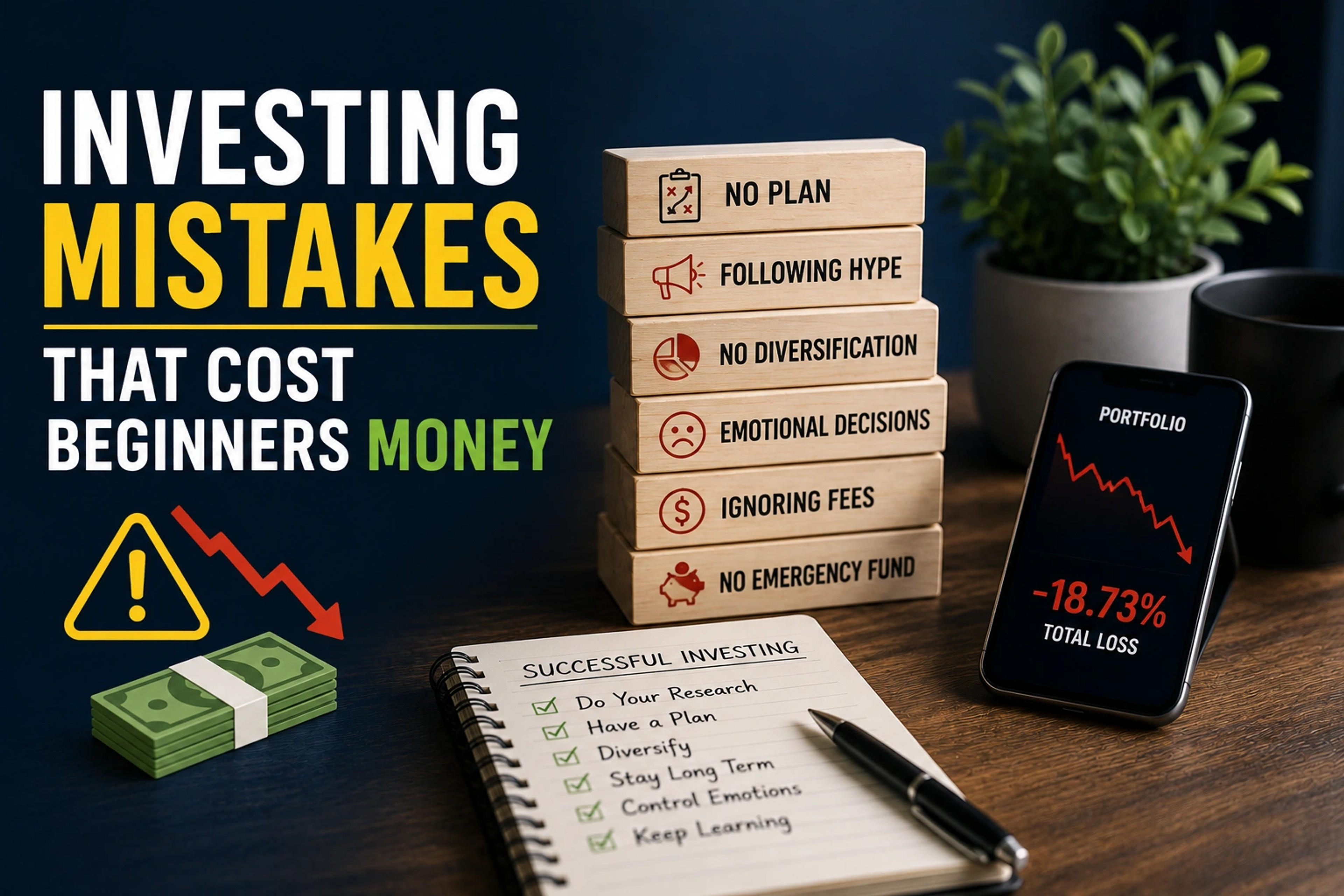
15 Investing Mistakes That Cost Beginners Money
Avoid these 15 common investing mistakes that can cost beginners money. Learn practical tips to build a smarter, long-term investment strategy.
Key takeaway
Avoid these 15 common investing mistakes that can cost beginners money. Learn practical tips to build a smarter, long-term investment strategy.
Some links are affiliate links. If you sign up we may earn a commission at no extra cost to you. See our disclosure. This is educational content, not financial advice.
Investing is one of the most effective ways to build long-term wealth. When beginners lose money, it's usually because of avoidable mistakes rather than because investing itself is too risky.
It's easy to get swept up in social media hype, follow the crowd or expect quick profits, and those habits lead to poor decisions that can set your goals back. Most of these mistakes can be prevented if you know about them early. Here are 15 common ones and how to avoid each.
Quick answer
Successful investing is less about finding the perfect stock and more about making sensible decisions consistently and avoiding expensive mistakes. The big ones at a glance:
| Mistake | Potential Impact | How to Avoid It |
|---|---|---|
| Investing without research | High | Learn before investing |
| Chasing hot stocks | High | Focus on fundamentals |
| Trying to time the market | High | Invest consistently |
| Lack of diversification | High | Spread investments |
| Emotional investing | High | Follow a long-term plan |
| Ignoring fees | Medium | Compare investment costs |
| Investing money you'll soon need | High | Build an emergency fund first |
| Following social media blindly | High | Verify information independently |
| Unrealistic expectations | Medium | Think long term |
| Not reviewing investments | Medium | Review periodically |
1. Investing without understanding what you're buying
One of the most common beginner mistakes is buying into a company, fund or asset just because someone recommended it. Before you invest, you should know:
- What the investment is.
- How it makes money for you.
- What the risks are.
- Why you're investing in it.
If you can't explain an investment in simple terms, you probably need to do more research. Never invest purely on a tip from a friend, an influencer or social media.
2. Chasing "hot" stocks
When a stock is in the headlines because its price has shot up, many beginners rush to buy for fear of missing out. Buying after a big surge often means paying more than the investment is worth, and markets move quickly: yesterday's favourite may do very differently tomorrow. Base your decisions on research and your own goals, not on fear of missing out.
3. Trying to time the market
Many investors believe they can predict exactly when prices will rise or fall. Even experienced professionals struggle to do this consistently, and waiting for the perfect moment often means missing out. Investing regularly over time, instead of trying to predict short-term moves, can soften the effect of market swings.
4. Not diversifying
Putting all your money into one stock, one industry or one asset greatly increases your risk. Diversification limits the damage if one investment does badly. Depending on your goals, a diversified portfolio might span different industries, asset types and regions. It helps manage risk, but it doesn't remove the possibility of losing money.
5. Letting emotions drive decisions
Fear and greed are behind a lot of bad investment decisions. Some investors panic during a fall and sell at a loss; others get carried away in a strong market and buy at inflated prices. Successful investors generally follow a plan instead of reacting to short-term news. Set your strategy before you invest and stick to it in good markets and bad.
6. Ignoring fees
Small fees look harmless, but over many years they eat into your returns. Common costs include:
- Management fees
- Trading commissions
- Fund expense ratios
- Account maintenance charges
Compare fees before you choose an investment product or platform.
7. Investing money you'll need soon
Money for rent, emergencies, tuition or other short-term goals generally shouldn't be exposed to much market risk. Investments go up and down, and you might be forced to sell at a bad time. Build an emergency fund before you invest money meant for long-term goals.
8. Following social media blindly
Social media can be a good place to learn, but it's also full of misinformation, speculation and unrealistic success stories, and plenty of viral investment ideas have no solid research behind them. Treat it as a starting point rather than your only source, and check the facts with reliable financial resources.
9. Expecting quick profits
Many beginners start investing hoping to double their money in a few months. Long-term investing is generally about building wealth gradually. Set realistic expectations and focus on investing consistently over many years.
10. Never reviewing your portfolio
You shouldn't be trading constantly, but ignoring your investments completely isn't ideal either. Over time your portfolio can drift away from the mix you intended. Review it now and then to make sure it still fits your goals and risk tolerance.
11. Investing without clear goals
Investing gets much easier when you know why you're doing it, and different goals often call for different strategies. Common goals include:
- Retirement
- Buying a home
- Children's education
- Financial independence
Define your goals before choosing investments.
12. Borrowing money to invest
Investing with borrowed money magnifies both your potential gains and your potential losses. If the investment falls while you're still repaying the loan, your situation can get much harder. Don't invest money you've borrowed or can't afford to lose.
13. Ignoring your risk tolerance
Every investor has a different ability and willingness to ride out market swings. Investments that don't match your comfort level can lead to panicked decisions when markets get bumpy. Choose investments that fit your goals, your time horizon and your own tolerance for risk.
14. Not continuing to learn
Markets, investment products and economic conditions change over time, and investors who keep learning are generally better prepared. Read books, follow reputable financial publications and keep building your knowledge.
15. Giving up after early losses
Every investor goes through periods when their investments lose value, and a short-term loss doesn't mean your long-term strategy has failed. Many beginners stop investing after their first downturn and miss the recovery that follows. Think of investing as a long-term commitment and don't make decisions based only on short-term moves.
Key takeaways
- Understand every investment before you buy it.
- Don't chase market trends or viral stock tips.
- Diversify to help manage risk.
- Focus on long-term investing rather than quick profits.
- Keep your emotions in check when markets are volatile.
- Review your investments periodically.
- Keep improving your financial knowledge.
Final thoughts
No investor gets every decision right. What usually separates successful investors from unsuccessful ones is discipline rather than intelligence. Avoid the common mistakes, focus on your long-term goals and keep learning, and you'll be in a much stronger position to build wealth over time. Successful investing is rarely about finding the next big winner. It's about making thoughtful decisions consistently and giving time a chance to work for you.
Frequently asked questions
What's the biggest investing mistake beginners make?
Investing without understanding what they're buying is one of the most common and costly mistakes.
How much should a beginner invest?
The right amount depends on your financial situation, goals, and ability to tolerate risk. Start with an amount you're comfortable investing after building an emergency fund.
Should beginners invest during a market downturn?
Market declines can create opportunities, but investment decisions should always be based on your long-term financial plan rather than short-term market movements.
Is diversification guaranteed to prevent losses?
No. Diversification helps manage risk but cannot eliminate the possibility of investment losses.