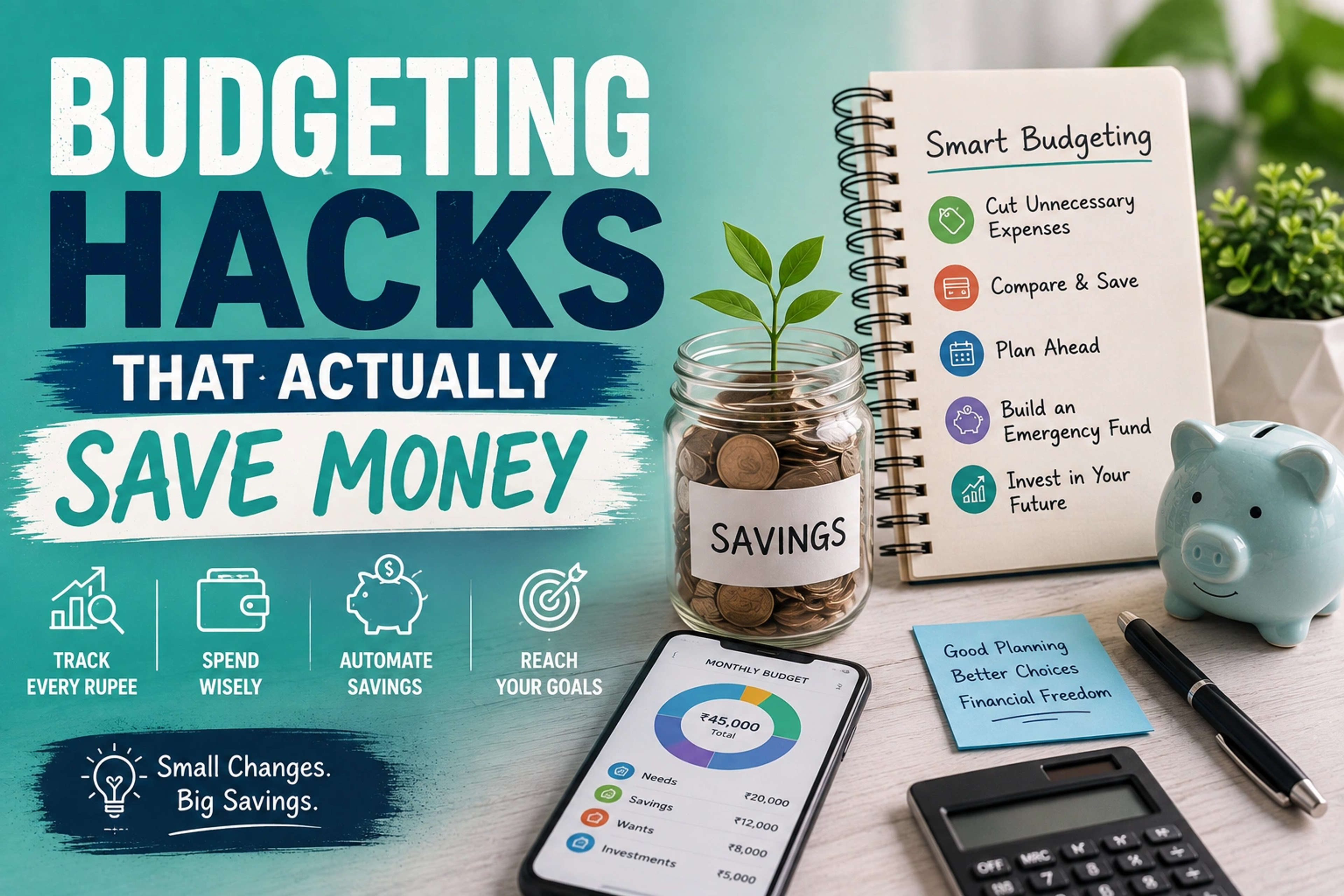
The Budget Rule That Changed My Finances
Discover a simple budgeting rule that can help you save consistently, control spending, and make your money work toward your financial goals.
Key takeaway
Discover a simple budgeting rule that can help you save consistently, control spending, and make your money work toward your financial goals.
Some links are affiliate links. If you sign up we may earn a commission at no extra cost to you. See our disclosure. This is educational content, not financial advice.
For a long time I thought budgeting meant asking myself "Can I afford this?" over and over. It made money feel restrictive. I'd make a budget, follow it for a while, overspend and give up.
I knew how to add up my expenses. The trouble was that my system depended on willpower. The rule that fixed it was simple:
Save a fixed percentage of your income before deciding what you can spend.
Instead of saving whatever happened to be left at the end of the month, I made saving part of the plan from the start.
Stop saving what's left over
This is where a lot of budgets go wrong. Your income arrives, you pay the bills, you spend on food, entertainment, shopping, subscriptions and everything else, and at the end you look at what's left and decide to save it. Some months there's money left. Some months there isn't. Saving has become optional.
I reversed the order: income first, then savings, then spending. That one change made my saving far more consistent.
Start with a percentage you can keep up
You don't need an extreme target. If saving 20% feels impossible, start with 5%, and raise it later once 5% feels comfortable. On a monthly income of ₹50,000:
- 5% = ₹2,500
- 10% = ₹5,000
- 15% = ₹7,500
- 20% = ₹10,000
The exact percentage matters less than having a system you can repeat every month.
The rule gets better as your income grows
When your income goes up, don't raise your spending by the same amount. Send part of the increase to your financial goals instead.
Say your income rises by ₹10,000 a month. You could spend ₹5,000 of it and put the other ₹5,000 toward savings, investing or paying off debt. You still get to enjoy earning more, and your progress speeds up too. It stops lifestyle inflation from eating every raise.
Automate it
The easiest way to stick to a money rule is to take the decision away. Set up an automatic transfer for shortly after your salary arrives, so the savings leave your account first and you spend what remains.
Then you don't have to remember to save each month, and you're less likely to spend the money just because it's sitting in your everyday account.
Give your savings a purpose
Saving with no goal in mind can feel pointless. It helps to split your savings by what they're for:
- An emergency fund, for unexpected expenses and gaps in income.
- Short-term goals, like travel, big purchases, education or other planned costs.
- Long-term wealth, money meant for long-term investing.
Once money has a job, it's easier not to spend it on something else.
What if you have debt?
The rule still works, but your priorities may change. You might put your money toward:
- Essential expenses
- A basic emergency cushion
- High-interest debt
- Longer-term savings and investing
The right order depends on your situation. Progress doesn't always mean investing more straight away; paying down expensive debt can be one of the best things to do with your money.
Don't turn it into a punishment
A good budget shouldn't make you feel guilty every time you spend. If you save hard but feel deprived all the time, the system probably won't last, so leave room for things you really enjoy. I stopped aiming to spend as little as possible and started making sure my spending reflects what matters to me. That's much easier to keep up.
A simple version to try
- Choose a starting savings percentage.
- Automate the transfer for just after payday.
- Keep your spending within what's left.
- Raise the percentage when your income goes up.
- Review the rule every few months.
You don't need a complicated spreadsheet. You need a system that keeps working when you're busy, distracted or tempted to spend.
Why it works
The change is more psychological than mathematical. I used to treat savings as whatever was left. Now saving happens first, and the question I ask each month has changed from "How much can I save?" to "How should I use what's left?" Budgeting feels a lot more deliberate that way.
Final thoughts
The best budgeting rule is often the one that takes away the most decisions: save first, spend the rest on purpose, and save more as your income grows.
You don't need to change your whole lifestyle overnight. Start with an amount you can keep up, automate it, and let the habit do the work. Better finances usually come from making a good decision over and over, more than from one perfect decision.