How to Budget on a Low Income
Learn how to budget on a low income with practical strategies to reduce expenses, prioritize essentials, build savings, and improve your financial stability.
Key takeaway
Learn how to budget on a low income with practical strategies to reduce expenses, prioritize essentials, build savings, and improve your financial stability.
Some links are affiliate links. If you sign up we may earn a commission at no extra cost to you. See our disclosure. This is educational content, not financial advice.
Budgeting on a low income can feel overwhelming when every paycheck is already stretched to cover the essentials. With so little left after the bills, saving or getting ahead can seem impossible.
How much you earn matters less to a budget than what you do with it. A realistic budget helps you put necessities first, cut spending that isn't worth it, prepare for surprise expenses and work toward long-term goals, even if progress is slow.
Quick answer
A budget is there to help you spend on purpose, and it doesn't have to feel restrictive. The basics:
- Know exactly how much income you receive each month.
- List every essential expense.
- Track where every dollar goes.
- Cut unnecessary spending where you can.
- Build a small emergency fund over time.
- Review and adjust your budget every month.
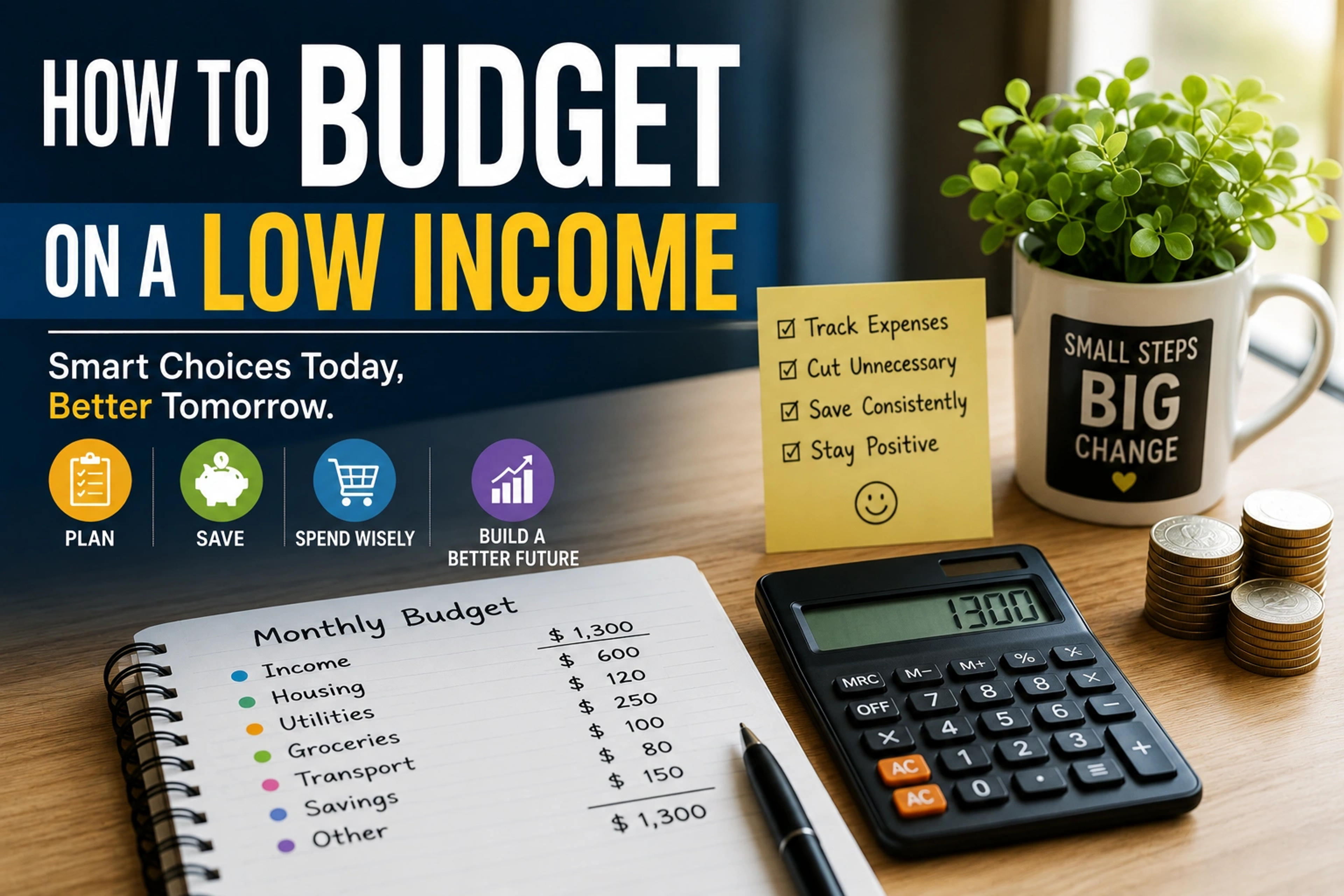
Step 1: Work out your monthly income
Start with how much money you actually receive each month after taxes and deductions. If your income changes from month to month, use an average of the last several months. A budget built on a realistic income figure is much more reliable.
Step 2: Put essential expenses first
Cover your basic needs before anything else, for example:
- Housing
- Utilities
- Groceries
- Transportation
- Insurance
- Healthcare
- Minimum debt payments
Once those are covered, you can decide what to do with whatever is left.
Step 3: Track every expense
Many people underestimate how much they spend on small daily purchases. For one month, write down every expense, even small ones like coffee, snacks or convenience store runs. It usually shows you patterns in your spending and places you could save.
Step 4: Cut costs without making life miserable
You don't have to give up everything you enjoy. Look for expenses that give you little in return, such as:
- Unused subscriptions.
- Frequent food delivery.
- Impulse shopping.
- Overlapping streaming services.
- Bank fees you could avoid.
Small savings, made consistently, add up.
Step 5: Save something, even if it's small
You don't need to save hundreds of dollars a month. Saving a small amount regularly builds the habit and gives you a cushion for unexpected expenses. As your income grows, you can save more.
Common budgeting mistakes
Watch out for these:
- Making a budget you can't stick to.
- Forgetting occasional expenses.
- Not tracking your spending.
- Using credit cards to cover everyday costs.
- Giving up after one hard month.
A budget is meant to change over time. If part of it isn't working, adjust it instead of abandoning the whole thing.
Key takeaways
- Budgeting is about managing your money, not restricting your life.
- Pay for essentials before spending on anything else.
- Track your spending to find places to save.
- Build savings gradually with regular contributions.
- Review your budget regularly and adjust it as your situation changes.
Final thoughts
A low income brings real financial challenges, and a thoughtful budget helps you get the most from every dollar. It doesn't have to be perfect. It has to be realistic, fit your circumstances and help you make steady progress. Spending a little less, saving a little more and planning ahead will strengthen your finances over time.