Budget Mistakes That Quietly Cost You Hundreds
Discover the most common budgeting mistakes that quietly drain your money and learn practical strategies to build a budget that actually works.
Key takeaway
Discover the most common budgeting mistakes that quietly drain your money and learn practical strategies to build a budget that actually works.
Some links are affiliate links. If you sign up we may earn a commission at no extra cost to you. See our disclosure. This is educational content, not financial advice.
Making a budget is one of the smartest money decisions you can make, but having one isn't enough. Plenty of people plan their monthly income and expenses carefully and still struggle to save, usually because of small mistakes that go unnoticed for months or years.
A forgotten subscription, an underestimated grocery bill or an annual charge you didn't plan for doesn't feel like much at the time. Together they can cost hundreds, or even thousands, of dollars. Budgeting doesn't have to be perfect, though, and a few simple adjustments make a budget more realistic, easier to follow and much more effective.
Here are 15 common budgeting mistakes and how to avoid them.
Quick answer
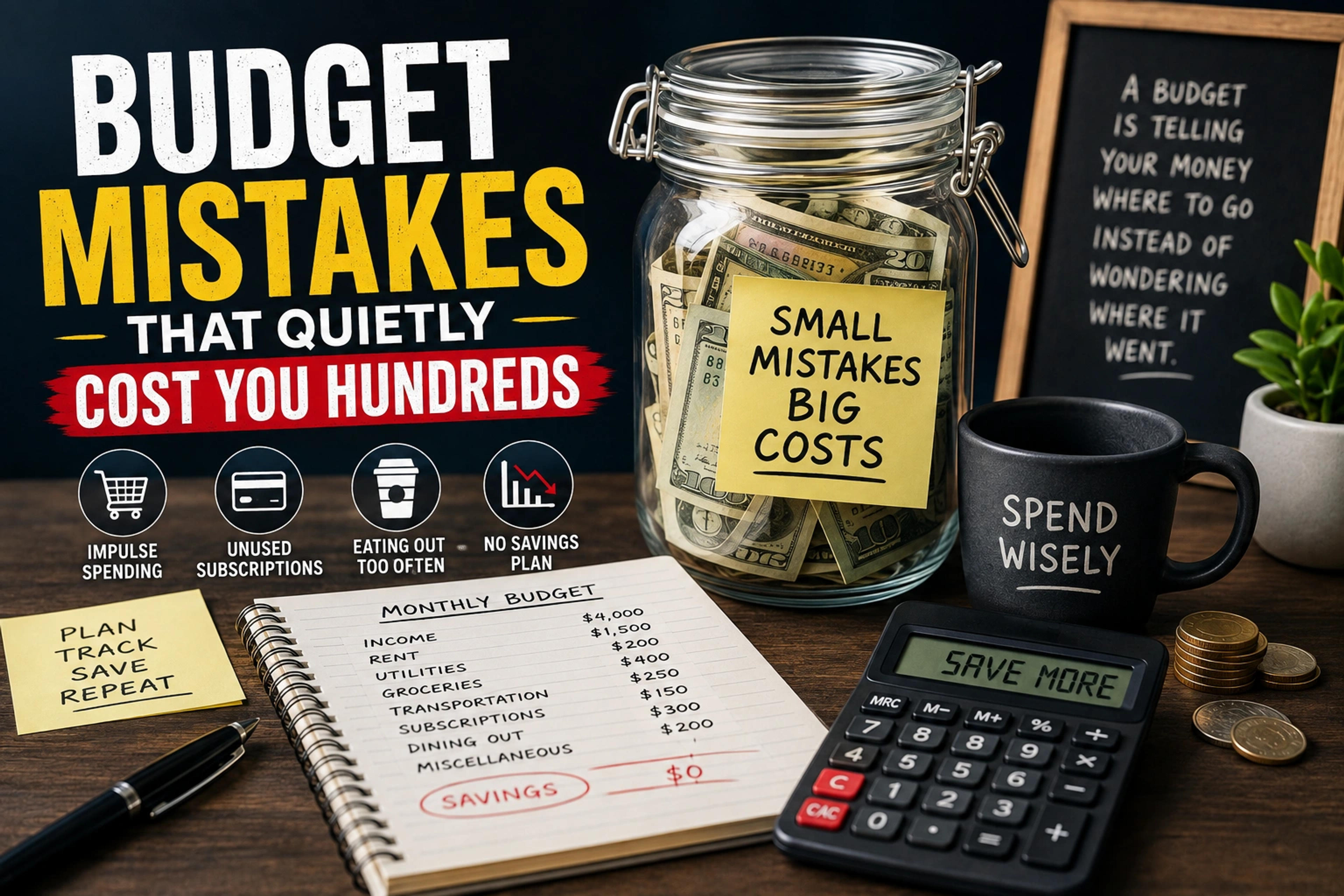
A budget shouldn't make you feel restricted. It should help you spend on purpose and stay in control of your money. The most common mistakes, and what to do instead:
| Budget Mistake | Why It Happens | Better Approach |
|---|---|---|
| Not tracking spending | Guessing instead of measuring | Review expenses weekly |
| Forgetting irregular bills | Focusing only on monthly expenses | Plan for annual and quarterly costs |
| Unrealistic savings goals | Trying to save too much too quickly | Increase savings gradually |
| Ignoring small purchases | "It's only a few dollars" mindset | Track every expense |
| No emergency fund | Unexpected expenses | Build a financial cushion |
| Lifestyle inflation | Spending more as income grows | Increase savings with income |
| Never reviewing the budget | Budget becomes outdated | Update it every month |
1. Not tracking where your money goes
Many people build a budget from estimates instead of their real spending. You might think you spend $250 a month eating out, while your bank statements show a much higher figure. Without tracking, it's hard to see where money is slipping away.
Go through your bank and credit card statements every week, or use a budgeting app that sorts your expenses automatically.
2. Forgetting irregular expenses
A budget with only monthly bills in it is incomplete. Many costs come once or twice a year, such as:
- Insurance premiums
- Vehicle maintenance
- Holiday gifts
- School expenses
- Property taxes
- Annual subscriptions
If you don't plan for them, they throw your budget off when they arrive. Estimate your yearly irregular expenses and turn them into monthly savings amounts.
3. Setting unrealistic savings goals
Wanting to save is great, but goals you can't keep up usually end in frustration. Trying to save 50% of your income straight away, for example, may leave too little for everyday costs. Start with a realistic target and raise it as your income grows or your spending gets leaner.
4. Ignoring small purchases
Many people budget carefully for rent and groceries and ignore everyday spending. Coffee, snacks, delivery fees, parking and in-app purchases look trivial one at a time but add up surprisingly fast. Track every purchase for at least a month and you'll understand your spending habits far better.
5. Not having an emergency fund
Unexpected expenses are inevitable. Car repairs, medical bills, home maintenance or a temporary loss of income can wreck your budget if you have no savings. Build an emergency fund gradually, even if you can only add a small amount each month.
6. Lifestyle inflation
When income goes up, many people automatically spend more. A bigger paycheck often brings:
- More expensive restaurants
- New subscriptions
- Bigger car payments
- More frequent shopping
- Upgraded gadgets
Enjoying your success is perfectly reasonable, but letting every raise turn into extra spending slows down building wealth. When your income rises, consider putting part of the increase into savings or investments before spending more.
7. Never reviewing your budget
A budget isn't something you make once and forget. Your income, expenses and goals all change, and a budget that worked last year may not fit your life now. Review it at least once a month and adjust it when you need to.
8. Using credit cards to cover shortfalls
If you regularly lean on credit cards because your money runs out before payday, your spending plan needs adjusting. Carrying a balance also brings interest charges, which makes future budgeting even harder. Find the categories that keep going over and adjust them before you rely on borrowed money.
9. Forgetting about inflation
Prices rarely stay put. Groceries, transport, utilities, insurance and other essentials tend to get more expensive over time, and if your budget never changes, you'll slowly fall behind. Every few months, check your recurring expenses and update your budget to current prices.
10. Budgeting without clear goals
Saving is much easier when you know what it's for, for example:
- Building an emergency fund
- Buying a home
- Paying off debt
- Retirement
- Starting a business
- Taking a holiday
Goals give you motivation and make budgeting feel worthwhile. Write down your short-term and long-term goals and link your budget to them.
11. Treating every month the same
Months don't all cost the same. Some include holidays, birthdays, school fees, travel or seasonal utility bills, and ignoring that usually leads to overspending. Look ahead at your calendar and adjust your budget before the bigger expenses arrive.
12. Forgetting to budget for fun
One of the quickest ways to abandon a budget is to make it too strict. Cutting out entertainment and hobbies completely often leads to frustration and impulse spending later. Include a reasonable amount for entertainment and personal spending so the budget is something you can live with.
13. Not comparing prices
Many people renew insurance, internet plans and subscriptions automatically without checking for better deals. Small price differences across several services can add up to real savings over a year. Review your major recurring bills at least once a year and compare the alternatives.
14. Focusing only on cutting expenses
Cutting unnecessary spending helps, but earning more can improve your situation too, and relying only on cuts may limit your progress. Consider building extra income through side hustles, freelancing, investing or developing skills people will pay for.
15. Giving up after one bad month
No budget is perfect. Unexpected expenses happen and some months won't go to plan. Many people abandon budgeting altogether after one difficult month instead of adjusting. Treat budgeting as a long-term habit rather than a monthly test, learn from the setbacks and keep improving your plan.
Signs your budget is working
A working budget doesn't mean you never spend money. It means your spending matches your priorities. Good signs include:
- You're saving money consistently.
- Your bills are paid on time.
- You feel less stressed about money.
- Unexpected expenses are easier to handle.
- You're making progress toward your goals.
- You know exactly where your money goes each month.
Key takeaways
- Budgeting mistakes are often small but get expensive over time.
- Track your spending instead of relying on estimates.
- Plan for irregular expenses before they arrive.
- Build an emergency fund to protect your budget.
- Review and update your budget regularly.
- Aim for consistency, not perfection.
Final thoughts
A budget isn't meant to control your life. It gives you more control over your money. Most budgeting problems come from small habits repeated month after month without much thought, rather than from big mistakes.
Avoid these common mistakes and review your spending regularly, and you'll have a plan that's realistic, flexible and able to support your long-term goals. The best budget isn't the most complicated one; it's the one you can stick to.
Frequently asked questions
What's the biggest budgeting mistake?
Failing to track actual spending is one of the most common mistakes because it makes every other budgeting decision less accurate.
How often should I update my budget?
Reviewing your budget once a month is usually enough for most households. Update it whenever your income, expenses, or financial goals change.
Is it okay if I don't follow my budget perfectly?
Absolutely. A budget is a guide, not a rigid rulebook. The goal is steady improvement, not perfection.
Should I budget even if I have a high income?
Yes. Budgeting helps people at every income level make intentional financial decisions and avoid unnecessary spending.