
How to Build an Emergency Fund: A Step-by-Step Guide
Learn how to build an emergency fund from scratch. Discover how much you should save, where to keep your money, common mistakes to avoid, and practical strategies to reach your savings goal.
Key takeaway
Learn how to build an emergency fund from scratch. Discover how much you should save, where to keep your money, common mistakes to avoid, and practical strategies to reach your savings goal.
Some links are affiliate links. If you sign up we may earn a commission at no extra cost to you. See our disclosure. This is educational content, not financial advice.
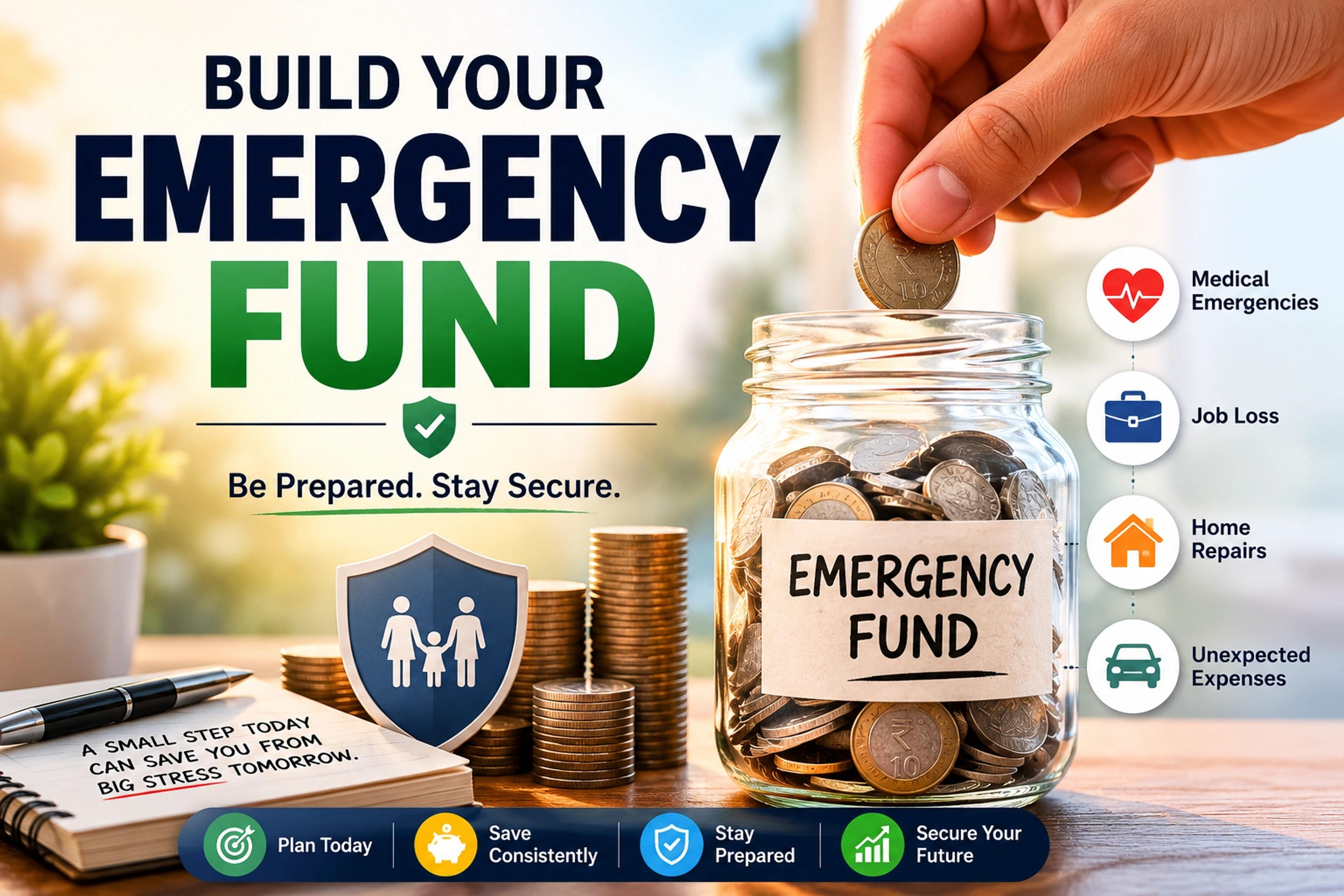
Unexpected expenses are part of life. Your car breaks down on the way to work, a medical emergency brings an unplanned bill, the fridge stops working, or you lose your job or some of your income. These things happen without warning, and if you aren't prepared, even a fairly small expense can cause real stress.
An emergency fund is money set aside for exactly these moments. Instead of turning to credit cards, personal loans or family and friends, you have savings ready when you need them. Building one takes time, but you don't need a big income to start; the habit of saving regularly matters most.
This guide covers what an emergency fund is, why it matters, how much to save, where to keep it and practical ways to build it faster.
Quick answer
An emergency fund is money kept aside for unexpected costs such as medical emergencies, job loss, major home repairs or urgent car repairs. It won't make you rich. Its job is to stop a temporary setback from turning into a long-term financial crisis. A good emergency fund is generally:
- Easy to get at.
- Kept separate from your everyday spending.
- Used only for real emergencies.
- Built up gradually through regular saving.
The right amount depends on your circumstances, how stable your income is and your monthly expenses.
Why an emergency fund matters
Many people focus on investing, paying off debt or earning more and overlook this basic foundation. Without emergency savings, unexpected costs often lead to:
- Credit card debt.
- Personal loans.
- Missed bill payments.
- Delayed financial goals.
- More money stress.
If your car suddenly needs a major repair and you have no savings, you may have to borrow, put it on a high-interest credit card, delay other bills or dip into long-term investments. With an emergency fund, the same situation is much easier to handle because you've already planned for it. Knowing the money is there also gives you peace of mind, which helps you make better decisions instead of reacting in a panic.
What counts as an emergency?
One of the biggest mistakes is treating every unexpected expense as an emergency. Your fund is for expenses that are:
- Unexpected.
- Necessary.
- Urgent.
- Hard to cover from your normal monthly budget.
Examples include:
- Emergency medical costs.
- Essential car repairs.
- Urgent home repairs.
- Temporary job loss.
- Emergency travel for a close family member.
- Unexpected vet bills.
- Replacing an essential appliance.
These usually can't wait and often need cash straight away.
What isn't an emergency?
Knowing what doesn't qualify matters just as much. Your emergency fund generally shouldn't pay for:
- Holidays.
- Festive shopping.
- Birthday gifts.
- New electronics.
- Clothes.
- Entertainment.
- Planned home renovations.
- Eating out.
- Concert tickets.
- Sales or limited-time discounts.
These may matter to you, but plan for them separately in your budget. Using emergency savings for them leaves you less able to handle a real surprise later.
How much should you save?
There's no single right number. It depends on:
- Your monthly expenses.
- How stable your income is.
- The size of your family.
- Your job situation.
- Any existing debt.
- Health considerations.
Rather than fixing on one target, it helps to think in stages.
Stage 1: a starter fund
If you're just starting out, build a small cushion first. It covers many common surprises while you keep paying down debt or working on other priorities.
Stage 2: one month of essential expenses
Next, aim to save enough to cover about a month of essential living costs, such as:
- Rent or mortgage.
- Utilities.
- Groceries.
- Insurance.
- Transport.
- Essential healthcare.
That gives you more security if your income is interrupted for a while.
Stage 3: a bigger safety net
Many financial experts suggest working toward several months of essential expenses, especially if your income is irregular, you have dependants or your job is less predictable. The ideal amount varies: someone with a stable job and more than one income may need a different fund from someone who is self-employed or works seasonally. What matters is making progress, not getting it perfect.
Where should you keep your emergency fund?
Your emergency fund needs to be there when you need it, so it shouldn't be in investments that could drop in value just before you need the money. A good place for it generally has three features.
It's easy to access, so you can get the money fairly quickly in an emergency.
It's low risk. Emergency savings are about stability, not high returns, so protecting the money matters more than growing it.
It's separate from your everyday spending. A separate account makes it less tempting to spend the money on non-essentials, and many people find saving easier when the money isn't sitting in the account they use every day. Aim for easy to reach, but not so easy that you dip into it on impulse.
How to work out your essential monthly expenses
Before deciding how much to save, work out your basic monthly living costs. List what your household actually needs, such as:
- Housing.
- Utilities.
- Groceries.
- Transport.
- Insurance.
- Loan payments.
- Healthcare.
- Childcare, if you have it.
Leave out discretionary spending like entertainment, holidays, luxury shopping or eating out. Knowing your essential costs gives you a realistic savings target instead of an arbitrary number.
A step-by-step plan to build your fund
The final goal can feel overwhelming, but you don't have to save it all at once. Build it one step at a time; steady saving usually works far better than trying to save large amounts every now and then.
Step 1: set a clear goal
Saving "whatever's left over" at the end of the month rarely works, because there often isn't much left. Decide what you're working toward: a starter fund, or one, three or six months of essential expenses.
Breaking it into smaller milestones makes progress easier to see and keeps you motivated. Your first milestone might be $250, then $500, then $1,000, then a full month of expenses. Every milestone you reach is worth celebrating.
Step 2: put it in your budget
Your emergency fund should be part of your monthly budget, not something you add to only when there's spare money. Treat it like any other important monthly cost alongside housing, utilities, groceries, transport, insurance, investing and entertainment. Giving it its own category makes you much more likely to contribute every month.
Step 3: automate your savings
One of the easiest ways to build an emergency fund is to stop deciding every month. Many banks let you transfer money automatically into a separate savings account on payday. Automating it means you save before you're tempted to spend, keeps you consistent and takes emotion out of the decision. Even small automatic transfers add up, and when the transfer happens before you see the money, you're less likely to miss it.
Step 4: start small and stay consistent
Many beginners put off saving because they think small amounts don't count. Consistency matters far more than size. Saving a modest amount every week or month is usually easier to keep up than saving a big amount once and then stopping. An emergency fund gets built through dozens, even hundreds, of small deposits.
Step 5: keep it separate
Don't keep your emergency savings in your everyday account, where it's easy to spend by accident. A dedicated savings account that's easy to reach in a real emergency but separate enough to discourage impulse spending creates a small mental barrier that can make a big difference to your saving.
Practical ways to save faster
Building an emergency fund doesn't always mean earning more. Often it starts with deciding more carefully where your current income goes.
Cut unnecessary monthly expenses
Go through your spending for the last few months and look for things that give you little value, such as:
- Unused subscriptions.
- Impulse online purchases.
- Frequent food delivery.
- Overlapping streaming services.
- Premium memberships you rarely use.
Redirecting even part of that money into your emergency fund speeds things up without touching your essentials.
Save unexpected money
Windfalls are a great chance to boost your fund, for example:
- Tax refunds.
- Work bonuses.
- Cash gifts.
- Rebates.
- Side hustle income.
- Refunds from cancelled subscriptions.
Instead of spending it all straight away, put at least some of it into your emergency savings.
Earn more
Cutting costs only goes so far, and extra income can get you there faster. Options include:
- Freelancing.
- Selling things you don't use.
- Tutoring.
- Weekend work.
- Online side hustles.
- Pet sitting.
- Delivery work.
Even temporary extra income can cut a lot of time off building your fund.
Try a no-spend week
A no-spend challenge doesn't mean skipping essentials; it means avoiding unnecessary purchases for a short time. For a week, cook at home, skip impulse shopping, pause entertainment spending and avoid unnecessary online orders, then move the money you didn't spend into your emergency fund. Many people are surprised how much one focused week saves.
Common challenges, and how to get past them
"I don't earn enough." A bigger income helps, but the habit matters just as much. If your budget is tight, start with an amount you can manage, even if it seems small. Building the habit now makes it easier to save more as your income grows.
"Something always comes up." Unexpected expenses are exactly why an emergency fund exists. The answer isn't to stop saving but to rebuild the fund after you've used it for a real emergency. Think of it as maintaining a safety net rather than finishing a one-off goal.
"Saving feels too slow." Progress can seem slow at first, because emergency funds don't grow dramatically in a few weeks; they grow through consistency over months and years. Instead of looking at how far you still have to go, look at how much closer you are than when you started.
Should you save or pay off debt first?
It depends on your situation, but many people benefit from a balanced approach:
- Build a small emergency fund.
- Focus on paying down high-interest debt.
- Keep growing your emergency fund.
- Invest more for the long term as your finances improve.
That gives you some protection while you cut expensive debt. The right balance depends on your income, debt, interest rates and goals.
Where an emergency fund fits in your financial plan
Think of your finances like building a house, where each part has a job. A common order is:
- Make a monthly budget.
- Build a starter emergency fund.
- Pay down high-interest debt where it makes sense.
- Grow your emergency savings.
- Start investing for the long term.
- Keep growing your income and building wealth.
Skipping the emergency fund leaves the rest of the plan exposed: one unexpected expense can derail your debt repayment, investing or other long-term goals.
Common emergency fund mistakes
Using it for non-essentials. An emergency fund isn't for holidays, shopping or festive gifts. Before you withdraw anything, ask whether the expense is unexpected, necessary and urgent. If it isn't, it's probably not an emergency.
Investing it. Investing is a great long-term strategy, but emergency savings have a different job. They should put stability and easy access ahead of higher returns, and investing money you might need tomorrow exposes it to short-term market swings.
Never topping it back up. Using your emergency fund isn't a failure; that's what it's for. Once the emergency has passed, though, make rebuilding it a priority.
Setting unrealistic goals. Trying to save several months of expenses straight away can be discouraging. Focus on one milestone at a time; small wins build momentum.
Forgetting to review it. Your fund should change as your life does. Review it whenever your income changes, your family grows, your housing costs change or your responsibilities increase, so it keeps meeting your needs.
Real-life examples
Example 1: an unexpected car repair
Sarah drives to work every day. One morning her car breaks down and the repair bill is $900. Without savings, she might have to use a high-interest credit card, borrow from family or put off other bills. Because she has an emergency fund, she pays the bill straight away and carries on with her normal budget. It's stressful, but it doesn't become a financial disaster.
Example 2: a temporary job loss
David unexpectedly loses his job. He's confident he'll find another, but it may take several weeks. His emergency fund covers rent, groceries, utilities, transport and insurance in the meantime, so instead of taking the first job on offer out of financial pressure, he has time to find one that fits his skills and career goals.
Example 3: an emergency medical bill
Maria gets an unexpected medical bill that her insurance doesn't fully cover. Because she has emergency savings, she pays it without taking on debt, protecting both her finances and her peace of mind.
Example 4: replacing a major appliance
One evening, James finds his fridge has stopped working. Replacing it wasn't in his budget, but it's essential. Instead of financing it or using a credit card, he pays from his emergency fund and rebuilds the savings over the next few months.
When should you use your emergency fund?
Ask yourself whether the expense is unexpected, necessary and urgent. If it's all three, your emergency fund may be the right place to turn, for example for:
- Emergency medical treatment.
- Essential home repairs.
- Emergency car repairs.
- Temporary unemployment.
- Emergency travel for a close family emergency.
- Replacing an essential household appliance.
If the answer is no, use your regular budget or a separate savings goal instead.
When should you leave it alone?
Some purchases feel important but aren't emergencies, such as:
- Booking a holiday.
- Buying a new phone because it's on sale.
- Festive shopping.
- Concert tickets.
- Home décor upgrades.
- New furniture (unless you're replacing something essential after unexpected damage).
- Impulse purchases.
- Luxury electronics.
The more carefully you protect your emergency fund, the more useful it is when a real emergency comes.
How to rebuild it after using it
Using your emergency fund doesn't mean you've failed; it means your savings did their job. Once the emergency is over, make rebuilding the fund your next priority.
- Pause and review. Look at how much you used, why you needed it and whether it really was an emergency. That can show you whether your plan needs to change.
- Restart your automatic savings. If you paused the transfers, start them again as soon as your budget allows. Consistency is the fastest way to rebuild.
- Cut back on optional spending for a while. For a few months, spend less on eating out, entertainment, shopping and subscriptions, and put the difference into your fund until you're back on target.
- Use extra money. If you get a tax refund, a work bonus, side hustle income or a cash gift, consider putting part of it toward topping up your savings.
Emergency fund checklist
Your emergency fund should:
- Be kept separate from everyday spending.
- Be easy to get at.
- Be used only for real emergencies.
- Cover your current needs.
- Be reviewed regularly as your life changes.
- Be topped up after you use it.
- Have a place in your monthly budget.
- Give you confidence when something unexpected happens.
If most of these are true, you're building a strong financial foundation.
Key takeaways
- An emergency fund protects you from unexpected financial setbacks.
- Build your savings gradually rather than all at once.
- Keep emergency savings separate from your everyday spending.
- Use the fund only for unexpected, necessary and urgent expenses.
- Review it from time to time as your situation changes.
- Rebuild it whenever you use it.
Final thoughts
An emergency fund isn't the most exciting financial goal. It won't produce impressive returns or transform your finances overnight. What it gives you is resilience. Life is unpredictable, but with money set aside you can deal with setbacks calmly instead of in a panic. It gives you breathing room when surprises come and protects the progress you've worked hard for.
You don't need to save it all this month. Make one contribution, then another, then another. Those regular deposits, however small they look today, build a safety net that gives you confidence, flexibility and peace of mind when life doesn't go to plan.
Quick summary
| Topic | Key Point |
|---|---|
| Purpose | Covers unexpected financial emergencies. |
| Where to Keep It | Safe, accessible, and separate from everyday spending. |
| Best Strategy | Save consistently through automatic contributions. |
| When to Use It | Only for unexpected, necessary, and urgent expenses. |
| Biggest Mistake | Spending it on non-emergencies |
| Long-Term Goal | Build financial security and reduce reliance on debt. |


